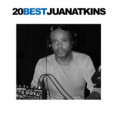
01. Alleys Of Your Mind (Cybotron Single A Side March 1981)
02. Cosmic Raindance (Cybotron Single B Side March 1981)
03. Cosmic Cars (Cybotron Single A Side June 1982)
04. Clear (Cybotron Single A Side June 1983)
05. Techno City (Cybotron Single A Side July 1984)
06. R-9 (Cybotron Single A Side January 1985)
07. No UFO’s (Model 500 12” A Side April 1985)
08. Future (Model 500 12” B Side April 1985)
09. Night Drive (Time, Space, Transmat) (Model 500 12” A Side November 1985)
10. Technicolor (Channel One 12” A Side January 1986)
11. Off To Battle (Model 500 12” B Side August 1987)
12. The Chase (Model 500 12” A Side October 1989)
13. Ocean To Ocean (Model 500 12” A Side May 1990)
14. I See The Light (Model 500 12” A Side May 1993)
15. Jazz Is The Teacher (M500 & 3MB 12” A Side May 1993)
16. Sonic Sunset [Calm Mix] (Model 500 12” A Side January 1994)
17. Game One (Infiniti 12” A Side November 1994)
18. Starlight (Model 500 12” A Side January 1995)
19. I Wanna Be There (Model 500 12” A Side July 1996)
20. Skyway (Infiniti Skynet LP September 1998))
It’s no secret that 2026 marks the fiftieth anniversary of punk and like a lot of folk actively involved (and many who weren’t), I’ve been writing the occasional piece for anyone interested enough to ask. In fact, I’d just finished the latest when I heard that Juan Atkins, the originator of Detroit Techno, had died of a heart attack on 31st October 2026 at just sixty four years old and it struck me immediately how in many ways he was the embodiment of the punk ideal. Not that he would ever have thought of himself in those terms.
Maybe it was his fierce anti-establishment spirit and radical DIY ethos that stopped Juan Atkins name being shouted from the highest rooftops during his lifetime, although chances are that your average punter shaking their Day-Glo arses in Ibiza or a corporate West Country festival has never heard of him. And that’s a shame because without him, twenty first century dance culture would sound very, very different.
Starting out in the late seventies as a lower middle class, African American teenager with a primitive Korg synthesiser and a big idea, Atkins teamed up with Derrick May and Kevin Saunderson, two of his fellow students at Belleville High School near Detroit. Inspired by the local radio show, Midnight Funk Association, and a playlist of cutting edge funk, New York electro and European futurists like Kraftwerk, Gary Numan, John Foxx, Telex and Japan’s Yellow Magic Orchestra, the three friends shared ideas, imagined what the dance music of the future would sound like and then set about making it.
The oldest by a year, at nineteen Atkins would be the first to break out of Belleville, joining up with fellow student Richard Davis to form Cybotron. Intent on celebrating the romance of all things technological and urban, their first two singles were no more than Kraftwerk by numbers featuring dystopian lyrics set to a synthetic soundtrack, but on their third single Atkins vision finally came into focus. Influenced by a trip to New York and Afrika Bambaataa’s use of the Roland TR-808 drum machine, ‘Clear’ completed the trinity by introducing the funk.
Cybotron went their separate ways in 1985 when Richard Davis insisted on a new rock direction with guitars, something that appalled the futurism obsessed Atkins. Determined to pursue a harder, harsher direction, he became Model 500, set up his own small imprint Metroplex to release ‘No UFO’s’ and invented techno. Named after the phrase ‘techno rebels’ in Aaron Toffler’s 1980 book Future Shock, while Model 500 created a new blueprint for stripped down, high tech, electro funk, it was still largely the work of one man. The catalyst for a techno future would only became possible when Atkins reconnected with his old Belleville friends.
Acting as their spiritual guide and benefactor, he gave them the confidence they needed to do their own thing, Derrick May setting up the Metroplex subsidiary Transmat to release tracks like the anthemic ‘Strings Of Life’ which would take Detroit Techno across the Atlantic, whereas Kevin Saunderson founded his own K.M.S. label and turned Inner City’s ‘Big Fun’ into the new genres first worldwide hit. Even so, without Juan Atkins it would never have happened.
When his moment in the spotlight drew to a close and the Belleville Three began to suffer a series of seemingly insurmountable financial and ethical problems, Juan Atkins took his album oriented ambitions to Europe where he could find plentiful work as a DJ and there was always a willing underground label to release his latest projects. And he was still on the periphery in the early noughties when his original techno vision and its many mutations began to infiltrate every aspect of the entertainment industry.
When he first started releasing music, Juan Atkins proposed that human beings and technology would become so interdependent they would become inseparable. Forty five years later, that proposal seems eerily prescient. A visionary in the truest sense with an influence on electronic dance music so comprehensive it tends to eclipse his own catalogue, Juan Atkins legacy is hard to quantify. After all, how many artists get to invent and name a genre that goes on to fundamentally change the direction of music culture?
Chris Green. 1st November 2026