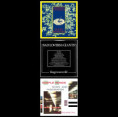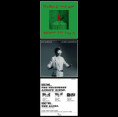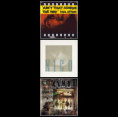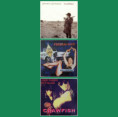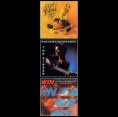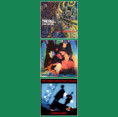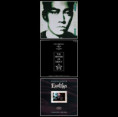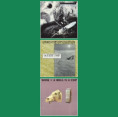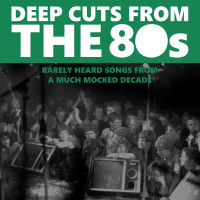
In 2022 esteemed music commentator David Hepworth released his Deep 70’s CD box set, which inspired me to compile my own very different version a year later. I guess the main reason why Hepworth’s seventies weren’t my seventies was because of his age. Born in 1950, a full decade before me, he went from being twenty years old in 1970 to thirty in 1979, whereas I went from being an innocent kid of ten years old to twenty. And that got me thinking that perhaps the eighties and my own years of young manhood would have been a more accurate comparison. After all, the era so often dismissed as the decade of decadence and disillusion was where I finally found my own voice, initially through a cassette label, fanzine and a couple of local record labels, before going fulltime with Criminal Damage Records.
Growing up in the pre-punk seventies, no-one ever thought about running a record label. That was part of a glamourous, corporate world out of reach of insignificant music nuts like me. Punk changed all that, empowering similarly insignificant geeks to create their own culture and release their message to the world via records, fanzines, self-promoted shows and club nights, even if it was just in their own small part of it. OK, so it took a while for that cultural explosion to filter out to the endless suburbs, small towns and villages across the nation, but by 1980 there was a thriving network of scenes to explore.
Influenced by such disparate ideologies as Paul Morley in the NME, Dave McCullough in Sounds and the extraordinary, mind changing missives in fanzines like Vague, Next Big Thing and Panache, my days were spent listening to music, reading about the brave new, counter cultural, post punk world being shaped around me and plotting my next move. Armed with my compelling vision, I continued the never ending search for the Holy Grail amongst the hordes of skinny herberts wielding their guitars in the independent underground, meeting plenty of maverick, self-appointed geniuses along the way.
The post punk, Goth and indie noise of Criminal Damage dominated my listening absolutely. And yet, I also found it necessary to hear as many records by other artist’s as I could, if only to reconnect with my own taste and cleanse my palette in readiness for the next sonic onslaught. Covering every possible kind of music, the likes of The Associates, Orchestral Manoeuvres In The Dark, The Beat, Echo & The Bunnymen, Bauhaus, The The, Orange Juice and Marc Almond became a lifeline that saved me from drowning in a sea of financial uncertainty and business nonsense.
Like the seventies before it, eighties music has been distilled down to a bunch of banal platitudes only with flares, long hair, concept albums, guitar solos, pogoing and safety pins replaced by big hair, big fashion, cheesy ballads, synthesisers, MTV and feeding the world. Having actually lived through the decade, I really don’t remember it that way so you won’t find any of that crap here. There was no manual to follow in my eighties, and if there was I’d probably have ignored it. So what I’ve tried to do here is document those overlooked and underrated leftfield songs I consider essential to grasping the period’s true musical significance, not as a clichéd, monolithic era, but as a gloriously vibrant ten years of exploration, expression and most of all, freedom!
Chris Green
September 2026
01. PETER GABRIEL ‘I Don’t Remember’ (Single B Side January 1980)
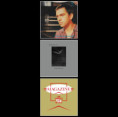
However much you shaped it, the music of Peter Gabriel didn’t fit into any post punk narrative, least of all mine. Nonetheless, fascinated by the sound and meaning of ‘Games Without Frontiers’ and it’s B Side ‘I Don’t Remember’, in January 1980 he got my full attention for the first time since The Lamb Lies Down On Broadway.
02. THE MONOCHROME SET ‘Expresso’ (Strange Boutique LP April 1980)
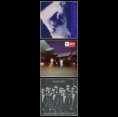
With its beautiful silver sleeve etched with the photo of a diver hanging gracefully in mid-air, Strange Boutique was an exotic blend of pop commentary about the darker side of love and sex, singer Bid’s arched brow baritone and a dazzling instrumental frenzy that sounds as fresh now as it did then.
03. MAGAZINE ‘Model Worker’ (The Correct Use Of Soap LP May 1980)
In January 1978, Howard Devoto and Magazine’s ‘Shot By Both Sides’ was the first single to step beyond the musical confines of punk and a couple of years later The Correct Use Of Soap continued his quest to break every taboo in the rule book. Female backing vocals, funky bass lines, prog rock keyboard’s and sax solos were absolute no no’s yet Devoto not only embraced them, he reinvented the art of the lyric too, the nervy, angular pop of ‘Model Worker’ daring to compare a relationship with that of a hard-working, Soviet labourer seeking a better life!
04. ULTRAVOX ‘Mr X’ (Vienna LP July 1980)
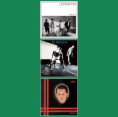
When John Foxx’s place in Ultravox! was taken by singer/guitarist for hire Midge Ure I expected the worst, but Vienna exceeded my expectations so completely it rendered those fears obsolete. Housed in a classy Peter Saville designed package, the album became an instant snapshot of the times, the groups in-built experimental tendencies honed into mainstream hits like the ubiquitous title track while the opening instrumental ‘Astradyne’ and sparse, Teutonic ‘Mr X’ were a reminder of former glories.
05. THE ASSOCIATES ‘The Affectionate Punch’ (The Affectionate Punch LP August 1980)
Billy Mackenzie and Alan Rankine came out of Dundee, Scotland with a penchant for arty glam, a love for hedonism, a surreal sense of humour and a taste for musical adventure. They would go on to become out of place pop stars via the extraordinary Sulk, but the more minimal songs and arrangements of The Affectionate Punch were my introduction to them. A well-kept secret even in 1980, the title track summed up Rankine’s studio savvy, MacKenzie’s unerring ability to swoop from a deep baritone to an impossibly high falsetto in a single breath and the inherent ‘otherness’ that made The Associates so special.
06. GARY NUMAN ‘The Joy Circuit’ (Telekon LP September 1980)
The beauty of punk was that it provided an escape route from your humdrum life if you dared take it. Gary Numan was the classic example, a cripplingly shy boy from Stanwell, a village next to Heathrow airport, leading a solitary existence with no friends but a multitude of enemies. Crucified by the critics despite or maybe because of his success, at the dawn of the eighties his life must have felt fairly desperate so it was no surprise when Telekon ended up being the conduit for his misery. A downbeat collection of electronica dripping with depression and paranoia, it ended with ‘The Joy Circuit’, the synths only entering halfway through after a viola/violin passage that sounded more human than replicant.
07. XTC ‘No Language In Our Lungs’ (Black Sea LP September 1980)
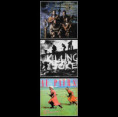
No matter how action packed my punk years were, it was inevitable that occasionally I would find myself stuck in my hometown in The Target pub beneath The Butts Centre where XTC seemed to be playing every other week. I must have seen them ten times in 1977 alone so it’s to their credit that three years and three albums later I was still listening. Regarded as one of their finest albums, not only did Black Sea feature the wonky Avant pop of ‘Respectable Street’ and ‘Generals And Majors’, it also included ‘No Language In Our Lungs’ (‘There is no language in our lungs / To tell the world just how we feel’), a song that struck a chord in me then that has stayed with me ever since.
08. KILLING JOKE ‘Primitive’ (Killing Joke LP October 1980)
Killing Joke sounded like the kind of group XTC could have been if Andy Partridge had hunkered down with some magic mushrooms and a few Aleister Crowley books instead of his daily dose of Valium and the latest Marvel comic. Released during a particularly bleak period, the savage rage of their debut accurately reflected the fear, anger and despair seeping into every corner of early eighties Britain and changed my idea of what music could be. It didn’t have to be arty, it didn’t have to be clever, but what it did have to do was slap you around the face and let you absorb what songs like ‘Primitive’ were really saying.
09. AU PAIRS ‘We’re So Cool’ (Playing With A Different Sex LP April 1981)
For all its liberating ideology and rhetoric, punk remained stuck in the dark ages when it came to female artists, which is why Lesley Woods Au Pairs were so important. And Playing With A Different Sex demonstrated just how significant they were, the righteous feminist anger on ‘We’re So Cool’ the antithesis of the standard boy meets girl, lovey-dovey stereotype.
10. GINA X PERFORMANCE ‘Kaddish’ (Voyeur LP June 1981)
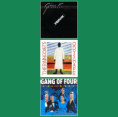
A German arthouse electro-disco project from Cologne created by lyricist Gina Kikoine and producer Zeus B. Held, Gina X Performance released three albums, Voyeur being the last and the most obscure. Dark and funereal, the most interesting thing about it was ‘Kaddish’, a cold, electronic dirge based on the Jewish prayer that is recited daily for eleven months after the death of a loved one.
11. THE RAINCOATS ‘Shouting Out Loud’ (Odyshape LP June 1981)
I wasn’t much of a fan of The Raincoats self-titled debut, their spirited amateurism tainted with the smell of hippie. Thankfully Odyshape was different again due to the musical skills they’d developed over the intervening two years. It was different stylistically too, the lithe dub reggae of ‘Shouting Out Loud’, the gothic folk of ‘Only Loved At Night’ and the wailing jazz poetry of ‘Red Shoes’ proving that literally nothing was off limits in their creative process.
12. GANG OF FOUR ‘To Hell With Poverty’ (Single A Side July 1981)
An anti-capitalist, left wing groove anthem, in the summer of 1981, with Thatcher’s policies already decimating the country and pushing it into severe recession, brutal unemployment, racial strife and a wave of rioting unprecedented in British history, ‘To Hell With Poverty’ was exactly what the kids needed, except most of them were more interested in Adam & The Ants, The Human League and Shakin’ Stevens than a bunch of idealistic, ex-university students from Leeds.
13. COMSAT ANGELS ‘Gone’ (Sleep No More LP August 1981)
I’d forgotten just how much I loved the Comsat Angels early records, even the ones nobody else liked. I loved the massive sound they made and their ability to turn an album of mood rather than melody into something special. The relentless gloom of Sleep No More was their best, an inescapably challenging listen but one that sit’s comfortably alongside Closer, Secondhand Daylight or any other album in the pantheon of art punk masterpieces.
14. SAD LOVERS & GIANTS ‘Things We Never Did’ (Single B Side September 1981)
Sad Lovers & Giants were one of those John Peel outfits of the early eighties who it was perfectly possible to see on the off chance at a tiny venue like The Ambulance Station, Windsor playing to an audience of ten, and that included the bar staff. Catchy and gloomy without being depressing, ultimately they would go on to make a lot more music but they never bettered the dynamic if forlorn ‘Things We Never Said’.
15. SIMPLE MINDS ‘Love Song’ (Sons and Fascination/Sister Feelings Call LP September 1981)
In 1981 Simple Minds were stuck in an Edinburgh flat writing new material when someone suggested that Jim Kerr should move away from the artsy, abstract imagery he was so fond of to write a simple ode to love. So that’s exactly what he did. The most commercial song on Sons and Fascination/Sister Feelings Call, ‘Love Song’ was the start of Simple Minds transformation into something sleeker and more expansive than their former selves, the songs instantly compelling nature bearing traces of the fist pumping stadium anthems to come, albeit in a pulsating, strictly European, electro rock setting.
16. PIGBAG ‘Sunny Day’ (Single A Side October 1981)
Everyone remembers ‘Papa’s Got A Brand New Pigbag’, the big number three dancefloor hit of 1982 by Pigbag, an instrumental sextet who emerged from the fractured pieces of The Pop Group. And yet, the equally infectious, brash and bold funk of ‘Sunny Day’ that preceded it seems to have been erased from living memory.
17. ORCHESTRAL MANOEUVRES IN THE DARK ‘Sealand’ (Architecture And Morality LP November 1981)
The constant criticism of early eighties synth pop was that it was soulless and cold, one of the most lambasted groups of the time being the defiantly unhip Orchestral Manoeuvres In The Dark. In hindsight it was Architecture And Morality that really singled them out, not least because of the inclusion of two songs dedicated to the 15th Century French martyr, Joan Of Arc. However, the album also acted as a bridge between the shimmer and shine of new pop and electronica’s pioneering origins, the sad, majestic soundscape ‘Sealand’ hinting at where they would go next.
18. NEW ORDER ‘Dreams Never End’ (Movement LP November 1981)
More like Joy Division’s last album than New Order’s first, Movement has languished ignored and unloved for too long. Neglected by the group themselves, the passing decades have actually been kinder to the album than some of their other work, surprisingly fully formed songs like Peter Hooks melodious, bass driven opener ‘Dreams Never End’ sounding like the full blown rock anthem you’ve heard before but can’t quite place.
19. ROBERT WYATT ‘At Last I Am Free’ (Nothing Can Stop Us Compilation LP March 1982)
The NME’s C81 cassette opened me up to a smorgasbord of music far beyond my comfort zone. Suddenly it was OK to like Robert Wyatt and why not given the wonder of his voice, his sense of musical adventure and his heartbreakingly honest reworking of Chic’s ‘At Last I Am Free’.
20. LAURIE ANDERSON ‘From The Air’ (Big Science LP April 1982)
Unlike Robert Wyatt, 35 year old Laurie Anderson had no connection to C81 or post punk but was adored by John Peel, if not by his listeners. I must have heard ‘From The Air’ on his show, an intriguing song about a plane plummeting to the ground written as a metaphor for every frightening thing about life in the 20th Century and presumably the 21st.
21. FUN BOY THREE ‘The Alibi (The Station's Full of Pipes)’ (Single B Side April 1982)
Ex Specials Terry Hall, Neville Staple and Lynval Golding were an odd, painfully misanthropic trio. Pushed along by deadpan chants, tribal percussion and not much else as one might expect from a group with just one musician amongst them, they sounded resolutely lo-fi, doomy and refreshingly different yet today are just another hastily scribbled footnote in the margins of pop history.
22. THE MOB ‘No Doves Fly Here’ (Single A Side April 1982)
Originally from the village of Stoke-sub-Hamdon just outside Yeovil, The Mob were active members of the Crass influenced anarcho punk scene but musically were nothing like the clichéd songs and sloganeering of their peers. ‘No Doves Fly Here’ remains one of their most enduring songs, a mournful, ominous hymn reworked against their will by Penny Rimbaud that was unsparing in its critique of militarism and the brutalities of war.
23. THE TEARDROP EXPLODES ‘Tiny Children’ (Single A Side June 1982)
My younger brother loved the Teardrop Explodes in much the same way as he loved The Stranglers, Blondie, Talking Heads and may God forgive him, The Police. Needless to say I didn’t, but there’s no denying the genius of the rarely heard ‘Tiny Children’, one of Julian Cope’s fragile, keyboard drenched ruminations on sadness, bewilderment and beauty.
24. TEARS FOR FEARS ‘Ideas As Opiates’ (Single B Side September 1982)
The B Side to ‘Mad World’, a massive hit that led to the John Peel favourites being ostracised by the underground, Roland Orzabal’s ‘Ideas As Opiates’ was just as good. With a title pinched from a chapter in Arthur Janov’s Prisoners of Pain, the songs stark, dissonant tone and disconcerting emptiness somehow evoked the feeling of being trapped by your own mind, which I guess was the whole point.
25. RIP, RIG & PANIC ‘Storm The Reality Asylum’ (Single A Side August 1982)
Named after a jazz album by Rahsaan Roland Kirk, Rip, Rig & Panic promised much but delivered little even with The Pop Groups Gareth Sager and Bruce Smith and an eighteen year old Neneh Cherry in their ranks. With a mission to educate us in free jazz and the avant-garde I guess they were doomed from the start. Even so, in an era when barriers were being hurdled and music was being redefined on a weekly basis, the chaotic energy of ‘Storm The Reality Asylum’ still managed to stick its head above the parapet.
26. THE BEAT ‘Rotating Head’ (Special Beat Service LP October 1982)
The Beat were an extraordinary group who somehow went under the radar and if they were thought of at all it was as also ran’s in the Two Tone ska revival. The fact is they were much, much more than that. Indeed, by 1982 they had moved far beyond the lightweight versions of ‘Tears Of A Clown’ and ‘Can’t Get Used To Using You’ they were known for to create Special Beat Service and the intense, vaguely sinister ‘Rotating Head’, a deep cut about government surveillance that gained little attention until an instrumental version was used in Ferris Bueller’s Day Off four years later.
27. GRACE JONES ‘Nipple To The Bottle’ (Single A Side October 1982)
In the seventies and eighties revolutionary artists were occasionally referred to as being like aliens from outer space. David Bowie was an obvious example, but in the list of extra-terrestrial artists there was surely no-one more alien than Grace Jones. Intent on subverting what was expected of her as both an artist and a woman, she portrayed herself as a terrifying, strangely exotic creature, ‘Nipple To The Bottle’so snarling like the cyborg dominatrix she was.
28. ECHO & THE BUNNYMEN ‘My White Devil’ (Porcupine LP February 1983)
It’s easy to forget now but in my early twenties Echo & The Bunnymen were the only group that mattered and nothing reminds me of 1983 quite like Porcupine. Released in the midst of a cultural landscape marked by naked hedonism, a preening self-referential smugness and mounting anger at the state of the nation, it was an album of dark, deliberately difficult songs by a group on the cusp of super stardom who managed to maintain their cool cult status via a series of anti-commercial japes like cajoling their loyal followers to cycle around Liverpool on a route mapped out in the shape of a rabbit’s ears!
29. JAPAN ‘All Tomorrows Parties’ (12” A Side February 1983)
Or how a group who had already ended their five album career revealed just how sophisticated they had always been by reconfiguring a three year old version of the Velvet Underground’s classic dirge into something glacial, haunted and wholly their own.
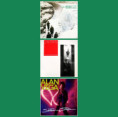
30. ALAN VEGA ‘American Dreamer’ (Saturn Strip LP April 1983)
31. PETE SHELLEY ‘Telephone Operator’ (XL-1 LP May 1983)
Alan Vega and Pete Shelley’s solo careers failed to take off commercially. Consequently, in 1983 both opted for big name producers to aid their quest. The Suicide singer brought in The Cars Ric Ocasek to polish his highly individual brand of rockin’ electronica and a weird as fuck cover of Hot Chocolate’s ‘Everyone’s A Winner’ while the Buzzcocks creative lynch pin handed control over to Human League producer Martin Rushent. Ultimately it made no difference, neither album doing very much, but XL-1 did reach the heady heights of number 42 in the UK charts, something Saturn Strip singularly failed to do.
32. CARE ‘My Boyish Days (Drink To Me)’ (12” A Side June 1983)
One of Liverpool’s great lost groups, Care were a pre Lightning Seeds Ian Broudie and a post Wild Swans Paul Simpson. Signed to Arista by Echo & The Bunnymen manager Bill Drummond, they were destined for stardom before Simpson’s mental health problems caused him to walk away from the closest to a sure thing his life in music would ever get, ‘My Boyish Days (Drink To Me)’ alone proof of their unfulfilled potential.
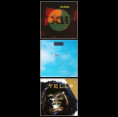
33. YELLO ‘Salut Mayoumba’ (You Gotta Say Yes To Another Excess LP June 1983)
I never realised quite how much I liked Deiter Meier and Boris Blank’s Yello until I checked out how many of their albums, cassettes, singles and extended dance mixes I had gathering dust in my garage. You Gotta Say Yes To Another Excess was just one, an outlandish masterpiece that still feels like the soundtrack to a lost Indiana Jones adventure. Taking in everything from jungle rhythms to Teutonic jazz, the highlight was the bonkers, suitably atmospheric instrumental ‘Salut Mayoumba’.
34. BAUHAUS ‘Honeymoon Croon’ (Burning From The Inside LP July 1983)
The final album before Bauhaus went their separate ways, the recording of Burning From The Inside was blighted by Pete Murphy’s pneumonia, meaning David J and Daniel Ash were forced to step into the breach vocally. Not that I noticed at the time, what with the dub-infected ’She's in Parties’, the stark ‘Kingdom's Coming’ and the blistering ‘Honeymoon Croon’ as good as anything from their past.
35. THE CHAMELEONS ‘Up The Down Escalator’ (Script Of The Bridge LP August 1983)
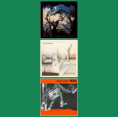
In the early eighties The Chameleons were one of those semi-mythical groups whose name would crop up in conversation but few had actually heard, at least until Script Of The Bridge appeared. Wrapped in a disconcerting, prog rock styled sleeve, the albums soaring guitars, wall-of-sound aesthetic and Mark Burgess's existential, melancholic lyrics put paid to any concerns I had on that score, particularly on ‘Up The Down Escalator’. The cornerstone of The Chameleons entire catalogue, it was the perfect embodiment of their seemingly effortless ability to write dizzying left of the dial songs with such consummate ease.
36. ESG ‘My Love For You’ (Come Away With ESG LP September 1983)
Formed by Renee, Marie, Valerie and Deborah Scroggins in the South Bronx and discovered by Factory supremo Tony Wilson, ESG played a minimalist hybrid of funk, punk and disco with a dash of the avant-garde thrown in for good measure. Consisting of little more than percussion, bass and vocal chants, the eleven tracks on Come Away With ESG would be pilfered mercilessly for samples during the golden age of hip hop and beyond by the likes of Big Daddy Kane and The Notorious B.I.G. Not that the Scroggin’s sisters benefitted financially. They remained in the housing projects raising their kids and working their arses off in regular day jobs just like the rest of us!
37. THE THE ‘Giant’ (Soul Mining LP October 1983)
A hidden masterpiece, Soul Mining was the first record I remember buying and listening to incessantly in an effort to escape the Criminal Damage related test pressings, demo tapes, cassettes and live shows I was hearing everyday. A loose concept album about depression and sinking into insanity, Matt Johnson’s ‘Uncertain Smile’, ‘The Sinking Feeling’, ‘Giant’ and ‘This Is The Day’ proved even more illuminating than the years of therapy I would undergo in my middle-age. And a lot more amusing too!
38. THE WAKE ‘Talk About The Past’ (Single A Side January 1984)
Glaswegians The Wake were one of the lesser known Factory Record groups resigned to playing second fiddle to their more successful label mates. Once described as the link between Joy Division and mid-eighties indie pop, the intense ‘Talk About The Past’s use of a synth leaned more towards New Order. Interestingly, when their four year association with Factory ended, the Wake would find a home at Bristol’s Sarah Records, one of the last bastions of the C86 aesthetic!
39. TALK TALK ‘Does Caroline Know?’ (Single B Side January 1984)
Critically reviled following the release of their debut album and safe in the knowledge that whatever they did would garner the same damning feedback, in 1983 Talk Talk’s Mark Hollis ditched new pop to go full on acoustic. A sneak preview of their new approach came with the release of ‘It’s My Life’ and its unassuming B Side ‘Caroline Knows’. Underpinned by a percussion driven rhythm and the sad overtones of Hollis’s voice, it provided yet another answer to the ubiquitous synth pop/art rock/post rock question of ‘What next?’
40. SCOTT WALKER ‘Track Three’ (Climate Of Hunter LP March 1984)
By the time Scott Walker released his new album in 1984 he had already been thrown into the post punk milieu by Julian Cope’s deleted-on-release Fire Escape In The Sky. As I would discover, Climate Of Hunter was nothing like the songs on that compilation which were culled from his late sixties Scott albums. With absolutely no concession to popular taste, ‘Track Three’ was the most likeable simply because it was the most conventional, but in hindsight it was the albums general lack of melody and opaque, nonsense lyrics that heralded the start of Scott Walker’s lonely descent from celebrated icon to cult legend.
41. ROBERT GORL ‘I Love Me’ (Night Full Of Tension LP March 1984)
Deutsch Amerikanische Freundschaft or DAF as they were more commonly known were a Düsseldorf duo of kinky leather boys who used their brutalist Eurodisco stomp and guttural voices to flirt with forbidden taboos. They had already dabbled with synth pop at various points during their short career but it still came as a shock when Robert Görl released Night Full Of Tension. Co-produced by Mike Hedges who had worked on The Associates Sulk, Görl sang mostly in English for the first time and even duetted with Annie Lennox on ‘Darling Don’t Leave Me’, but it was the wiggly ‘I Love Me’ that delighted me the most.
42. COLOURBOX ‘Say You’ (12” A Side March 1984)
Martyn and Steve Young’s Colourbox began life as an inconsequential indie group before ditching their guitars for samplers. Releasing a handful of adventurous records, they were the first to integrate the science of electronic music into the roots reggae they were hearing across their native south London, their sublime cover of U-Roy’s ‘Say You’ merging the heavy basslines of dub, the melodic sweetness of lover’s rock and the emotional expression of soul into a sound that would be developed further by the likes of Renegade Soundwave and Andrew Weatherall at the turn of the decade.
43. ORANGE JUICE ‘What Presence?!’ (12” A Side April 1984)
Orange Juice are cited as a key influence by all manner of artists but for the casual listener it’s often difficult to discover what all the fuss is about. For anyone keen to delve into their strange world, Orange Juice’s three albums, a mini album and a glut of singles remain just out of reach, even on Spotify where the group command a dismal 177,000 monthly listeners (Edwyn Collins himself has more than ten times that amount). To say that the group’s ability never quite matched up to their ambition might sound cruel but it’s meant as a compliment, an unfamiliar single like ‘What Presence?!’ a solid gold classic in my book.
44. THE CURE ‘Piggy In The Middle’ (The Top LP May 1984)
Given their global superstardom there’s a surprising number of Cure songs that are deep cuts, not least those on The Top (the obvious exception of ‘The Caterpillar’). The album a drug crazed Robert Smith almost went mad making and the one fans routinely profess to hate, odd little psychedelic pop tunes like ‘Piggy In The Middle’ remain lost and unloved in a dusty corner of their vast back catalogue awaiting discovery.
45. LIZZY MERCIER DESCLOUX ‘Mais Où Sont Passées Les Gazelles’ (Single A Side June 1984)
It’s incomprehensible now how French girl about town Lizzy Mercier Descloux was allowed to release as many unsuccessful major label albums as she did, although with a boyfriend like Ze Records Michel Esteban behind her I guess she could do pretty much as she pleased. The best of her eighties recordings was the impressionistic, anti-apartheid song ‘Mais Où Sont Passées Les Gazelles’, a surprise hit in France but sadly nowhere else.
46. FRANK CHICKENS ‘We Are Ninja (Not Geisha)’ (Single A Side June 1984)
On the verge of being an irritating novelty song, what I didn’t quite grasp about ‘We Are Ninja’ was that the Frank Chickens Kazuko Hohki and Kazumi Taguchi’s genius lay in their ability to combine catchy, risk-taking songs with lyrics that made it impossible to determine where the joke ended and the seriousness began.
47. THE FLOWERPOT MEN ‘Jo’s So Mean To Josephine’ (Single A Side December 1984)
Produced by The Banshees Steve Severin and reminiscent of Suicide with Nick Cave guesting on vocals, ‘Jo’s So Mean To Josephine’ was one of those menacing industrial dance records I used to play obsessively for a week or so until something else came along and I forgot all about it.
48. CABARET VOLTAIRE ‘James Brown’ (Single A Side January 1985)
In 1985 Cabaret Voltaire were attempting to do the impossible by tempering their cutting edge instinct with the demands of major label investment and commercial success, something they’d never had to deal with before. Inevitably that meant a few production changes to clean up their brand of electronica for the masses, the appropriately funky, horn heavy ‘James Brown’ being one of their better attempts which managed to get to number 100 in the UK singles chart (an achievement in itself) but no further.
49. PAUL QUINN ‘Ain’t That Always The Way’ (Single A Side February 1985)
Paul Quinn has become a semi-legendary kind of figure within the annals of eighties music culture because of his gorgeously rich baritone and the fact that his every venture seemed to be blighted by bad timing or just plain bad luck. The typically witty, slightly acerbic ‘Ain’t That Always The Way’ sounded like a country classic from the fifties or sixties whereas in truth it was written by Quinn’s childhood friend Edwyn Collins especially for him.
50. NICO ‘My Funny Valentine’ (Single A Side June 1985)
By the time 1985 came around I had been listening to Nico for over a decade, The End frying my fourteen year old brain with its unrelenting, eternally dismal laments. Thankfully the Nico of the mid-eighties was very different, although she still had that overriding sense of melancholy about her. Having said that, her John Cale produced version of ‘My Funny Valentine’ was different again with a touch of jazz instrumentation and a mournful piano highlighting the deep timbre of her voice caused by years of substance abuse.
51. CLAN OF XYMOX ‘No Words’ (Clan Of Xymox LP July 1985)
My eighties were dominated by Goth groups of one sort or another but Amsterdam’s Clan Of Xymox were more darkwave than Goth, their self-titled debut an exercise in the neoclassical, the orchestral and the choral as demonstrated by the surprisingly moving ‘No Words’.
52. JEFFREY LEE PIERCE ‘Love And Desperation’ (Wildweed Mini LP September 1985)
Sandwiched between The Gun Club’s first three albums and 1987’s Mother Juno, Jeffrey Lee Pierce’s Wildweed was one of the last meaningful statements from another doomed casualty of the excess laden eighties. Drenched in Pierce’s grand Southern Gothic themes of love, sex, death and the abandonment of God, it was more nuanced than Fire Of Love, Miami and The Las Vegas Story but every bit as absorbing.
53. FLESH FOR LULU ‘Baby Hurricane’ (Single A Side October 1985)
The under-appreciated Flesh For Lulu were a group I saw a lot of in the mid-eighties, whether it was supporting the Sisters Of Mercy or at regular haunts The Clarendon and The Rock Garden. On stage they were terrific, singer Nick Marsh’s stage presence intoxicating while the rest of the group rocked with verve and abandon behind him. At the same time, they seemed unable to transfer that feeling onto vinyl. Whether that was due to a shortage of decent songs or not is debatable but there was no doubting the glam fuelled swagger of ‘Baby Hurricane’.
54. JOHNNY THUNDERS & PATTI PALLADIN ‘Crawfish’ (Single A Side November 1985)
Having known a few myself, junkies of any description inevitably end up being a pain in the arse, the notorious Johnny Thunders only excuse being a God given talent for playing guitar that earned him the respect his lifestyle barely deserved. Following a couple of scrappy albums, in 1984 he got together with Patti Palladin to record Elvis’s ‘Crawfish’ and through some kind of sorcery transformed it into a cover version that was actually better than the original, a rare highlight of a questionable legacy that has always struggled to separate the man from the myth.
55. THE CRAMPS ‘People Ain’t No Good’ (A Date With Elvis LP February 1986)
56. NICK CAVE & THE BAD SEEDS ‘The Singer’ (Single A Side June 1986)
Two more artists who weren’t averse to the odd cover version or ten were Lux Interior and Nick Cave, albeit that the pulsating ‘People Ain’t No Good’ was a Cramps original on which Lux channelled the spirit of a possessed Jerry Lee Lewis to act as an unsettling contrast with the children’s choir on the chorus. Meanwhile, ol’ Nick tapped into his inner Johnny Cash on the suitably obscure ‘Folsom Prison Blues’ B Side ‘The Folk Singer’ and in his own inimitable way changed not only the title but the mood of the whole song.
57. WIN ‘You’ve Got The Power‘ [Remix] (12” A Side June 1986)
Like Paul Quinn before him, Davy Henderson’s Win were an essential part of Postcard Records mastermind Alan Horne’s ill-fated Swamplands label and showed just how little those involved with even the most renowned independent labels knew about mainstream success. Needless to say, commercially Win were a resounding failure. And yet, if a song like the rousing ‘You’ve Got The Power’ had been released by, say, Simple Minds, today it would be considered a standard.
58. THE FALL ‘Living Too Late’ (Single A Side July 1986)
To anyone under sixty every Fall song could be considered a deep cut so I had no lack of candidates to select from for inclusion here. In the end I went for ‘Living Too Late’, the last of an astonishing run of six Fall singles to chart at ninety or lower. Mark E. Smith’s commentary on ageing, frustrated hard men and even harder living, it was just one of the many gems hidden within the groups mid-eighties, Brix Smith inspired purple patch.
59. SPACEMEN 3 ‘Walking With Jesus’ (Single A Side November 1986)
As Criminal Damage Records became established, I began to get an increasing number of unsolicited demo tapes through the door. Most of them were instantly forgettable but I do remember one entitled For All The Fucked Up Children Of The World We Give You Spacemen 3 which included an early, off-puttingly bluesy version of ‘Walking With Jesus’. Fast forward two years and the final single version was unrecognisable. Still devotional and minimalist but with the blues guitar removed, it got in my head and wouldn’t leave, a reminder that music didn’t have to be loud and brash to be transcendent.
60. THE JESUS AND MARY CHAIN ‘Deep One Perfect Morning’ (Darklands LP August 1987)
As simple and confessional as the Spacemen 3 but infinitely more successful, post Psychocandy Jim and William Reid reduced both the sugary pop and feedback quotient in their songs. Shorn of those vital ingredients, their second album revealed a different kind of group, one clearly obsessed with classicism but with a brooding sense of introspection. In fact, whereas once I had resented the Mary Chain’s pose as elegantly wasted, black clad purveyors of ‘genius’ rock'n'roll, it was Darklands and songs like ‘Deep One Perfect Morning’ that convinced me they were worth persevering with.
61. RYUICHI SAKAMOTO FEAT. IGGY POP ‘Risky’ (12“A Side August 1987)
In 1987, the same year he won an Oscar, a Golden Globe and a Grammy for his work on The Last Emperor soundtrack, Ryuichi Sakamoto released Neo Geo. Starring heavyweight names like Sly Dunbar, Bootsie Collins and Bill Laswell, the albums lead single was ‘Risky’ featuring Iggy Pop. Often better on other artist’s material than his own, at the time Iggy was in between the slightly underwhelming Blah-Blah-Blah and the atrocious Instinct, so it was reassuring to hear how he still had the vocal wherewithal to transform Sakamoto’s relatively straightforward song into something remarkable.
62. SISTERS OF MERCY ‘Colours’ (12” B Side September 1987)
Originally featured on The Sisterhood’s Gift project, an EP released by Andrew Eldrich to scupper former Sisters Wayne Hussey and Craig Adams plan to use the name, ‘Colours’ was re-recorded for the B Side of ‘This Corrosion’. Defined by a sparse drum machine rhythm, layers of ominous synths and an obsessive, repetitive chorus, it was markedly different to the bare bones original and fitted seamlessly into the polished, cinematic production values of the Sisters Jim Steinman era.
63. CHRIS & COSEY ‘Exotika’ (12” A Side November 1987)
Freed from the shadow of Throbbing Gristle in 1981, Chris Carter and Cosey Fanni Tutti released an enormous body of work under a variety of names throughout the eighties. Fluctuating between the experimental and lightweight electro pop, ‘Exotika’ was one of their more successful releases, a predominantly spoken tone poem reminiscent of Kraftwerk but with an added dance element.
64. DAVID SYLVIAN ‘Let The Happiness In’ (Secrets Of The Beehive LP November 1987)
David Sylvian’s acknowledged masterpiece which incredibly struggled to sell just over 7,000 copies worldwide, Secrets Of The Beehive was an introspective, ridiculously lovely record of lush orchestration that lyrically went far beyond the themes of depression the former Japan frontman was so regularly accused of. Unashamedly serious, the album’s ten songs raised the question of music’s capacity to heal and how it can allow listeners to delve into emotions they don’t feel safe to explore elsewhere, something the relatively hopeful ‘Let the Happiness In’ delivered in abundance.
65. CRIME & THE CITY SOLUTION ‘On Every Train (Grain Will Bear Grain)’ (12” A Side April 1988)
Completely forgotten now, singer Simon Bonney’s Crime & The City Solution were regulars in the independent chart, initially due to the inclusion of ex Birthday Party members Roland S. Howard and Mick Harvey in their mid-eighties line up. I knew nothing about that because I didn’t get to hear Crime & The City Solution until 1988 when the romantic melancholy and ethereal pop of ‘On Every Train (Grain Will Bear Grain)’ made them as different to the mutant blues of their fellow Australian’s as it was possible to be.
66. WIRE ‘The Finest Drops’ (A Bell Is A Cup Until It Is Struck LP May 1988)
Continuing their unexpected return from a series of largely unsuccessful solo projects and collaborations, A Bell Is A Cup Until It Is Struck was Wire at their most polished which was not necessarily such a good thing for lovers of their late seventies masterworks. If anything, for all of its captivating lyric’s, musically the album was just a little too straightforward although ‘Silk Skin Paws’, ‘The Finest Drops’ and ‘Kidney Bongos’ weren’t too far short of Pink Flag, Chairs Missing and 154.
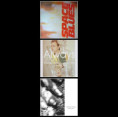
67. FELT ‘Space Blues’ (Space Blues 12” EP August 1988)
In many ways, what with their mad schemes, singular vision and lack of irony, Felt were the purest realisation of a most particular post-punk ideal, their records mirroring the changing attitudes and aspirations of the eighties independent scene. The culmination of frontman Lawrence’s infamous plan to release ten albums and ten singles in ten years, ‘Space Blues’ was a strange, slow motion, synth experiment vaguely reminiscent of Jeff Wayne’s mid-seventies work with David Essex and another unique entry in the Felt catalogue.
68. ALWAYS ‘Love And Death In Metroland’ (Thames Valley Leather Club And Other Stories LP September 1988)
El Records was created by Mike Alway following his disastrous partnership with Rough Trade’s Geoff Travis at Blanco Y Negro. Sticking rigidly to his own manifesto of a ‘pop world beyond leather jackets and jeans’, the label eschewed the tradition of new pop for those more interested in sixties bubblegum, the European chanson tradition and film soundtracks. Kevin Wright’s Thames Valley Leather Club And Other Stories released ironically under the name Always (perhaps in tribute to the label owner himself) was a classic, late eighties, él release. A perfectly English, art pop exercise centred around Wright’s self-consciously affected charm, it was something of an understated treasure, the occasional louche atmosphere and arrangements of songs like ‘Love And Death In Metroland’ pointing forward to early nineties Pulp and the murky origins of Britpop.
69. COCTEAU TWINS ‘Spooning Good Singing Gum’ (Blue Bell Knoll LP September 1988)
It’s quite possible to argue that apart from ‘Sugar Hiccup’, ‘Pearly Dewdrops Drop’ and ‘Carolyn’s Fingers’ the Cocteau Twin’s canon comprises entirely of deep cuts, their impression on the record buying masses minimal at best. I must admit I was never one for Liz Fraser’s airy fairy, unintelligible nonsense, yet somehow, despite song titles like ‘Spooning Good Singing Gum’ and ‘The Itchy Glowbo Blow’ and ‘Ella Megalast Burls Forever’, her dreamy voice and Blue Bell Knoll‘s widescreen audio tapestry made it sound almost accessible.
70. MARC ALMOND ‘She Took My Soul In Istanbul’ (The Stars We Are LP September 1988)
I used to bump into Marc Almond in the early days of The Batcave. A small, intoxicating creature he fitted that whole scene like a glove. Wonderfully uncool with a voice wavering all over the place yet bursting with an all too human passion, he explored the seedier, tackier side of life, living out his fantasies in the clubs and alleyways of old Soho. I loved all of his records even The Stars We Are, possibly the most pop album of his career but one that still managed to avoid the worst excesses of eighties production on a jewel like ‘She Took My Soul In Istanbul’.
71. BAND OF HOLY JOY ‘Manic, Magic, Majestic’ (Manic, Magic, Majestic LP March 1989)
Formed in New Cross, London by singer/lyricist Johny Brown, the inexplicably unknown Band of Holy Joy were a loose ensemble of fiddle, accordion, harmonium, piano and trombone juxtaposed with electronic keyboards and drum machines who created a quirky kind of old time music that was difficult to pin down. Looking back to folk, cabaret, busking and literature, Manic, Magic, Majestic proved both articulate and emotional, it’s ragged beauty studded with songs of misplaced hope, despair, betrayal and redemption that can still leave me breathless.
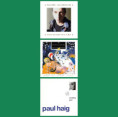
72. PAUL HAIG ‘Something Good’ (10” A Side March 1989)
The former front man of the ridiculously hip Josef K, Paul Haig soon tired of suffering for his art and not selling any records. Unfortunately, his first stab at a solo career, even with the financial clout of Island Records behind him, didn’t work out either so in 1988 he took the brave step of financing the recording of his next album himself. Working with ex Associate Alan Rankine, the new pop-ish lead single ‘Something Good’ was picked up by an offshoot of Virgin but once again he was denied the stardom he craved, the rise of Madchester, baggy and all that making his brand of electro pop sound hopelessly unfashionable and out of date.
73. THE DURUTTI COLUMN ‘Otis’ (Vini Reilly LP April 1989)
Another guitarist who suffered for his art was The Durutti Column’s Vini Reilly except he never seemed too bothered by his lack of commercial success. The last of the seven albums he recorded during the eighties, Vini Reilly contained a couple of his most memorable tracks, in particular the pulsating fingerpicked rhythm and captivating samples of ‘Otis’.
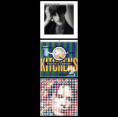
74. KITCHENS OF DISTINCTION ‘The 3rd Time We Opened The Capsule’ (12” A Side May 1989)
Sitting somewhere between dream pop and early shoegaze, the non-descript, oddly named Kitchens of Distinction provided a highlight in a year of change musically, the guitar rush and impassioned vocals of ‘The 3rd Time We Opened The Capsule’ close to perfection but doomed to indie anonymity like so many other records before it.
75. PUBLIC IMAGE LTD. ‘Disappointed’ (9 LP May 1989)
Anyone who knows anything about John Lydon and PiL knows for sure that his post seventies albums were a dog, his embrace of standard song structures and instrumentation leading to some seriously slim pickings. However, if you bothered to listen, buried amongst the doggy doo of 9 was the joyfully sarcastic ‘Disappointed’, a minor PiL classic about the many and varied ways friends let you down.
76. PETER MURPHY ‘A Strange Kind Of Love’ (Deep LP May 1989)
Rarely does the solo career of any singer match the success of their former group, and so it was with Pete Murphy of Bauhaus. At least his third album Deep pulled out all the stops, scoring an honest to goodness American radio/MTV hit with the irresistibly poppy ‘Cuts You Up’. Finally able to shake off the shackles of Goth, quite why nothing else from the album connected with the rank and file was a mystery, the follow up single ‘A Strange Kind Of Love’ a striking love song with one of Murphy’s more affecting lyrics.
77. GAVIN FRIDAY ‘Each Man Kills The Things He Loves’ (Each Man Kills The Things He Loves LP August 1989)
Each Man Kills The Things He Loves was Gavin Friday’s major label debut after a decade with the Virgin Prunes. A self-contained collection marking his transition into sophisticated, late night torch songs and cinematic, Scott Walker inspired melancholy, the album followed a similar pattern to the solo careers of kindred spirits Nick Cave and Marc Almond, something underlined by the inclusion of Dylan’s ‘Death Is Not The End’ and Jacque Brel’s ‘Next’. Even so, the indisputable highlight was the title song and it’s acknowledgement of an earlier Irish aesthete by using Oscar Wilde’s ‘Ballad Of Reading Gaol’ for its lyrics.
78. PALE SAINTS ‘Sight Of You’ (Barging Into The Presence Of God EP September 1989)
I came early to Leeds trio the Pale Saints, having seen them supporting Lush at the same Camden Falcon show that persuaded 4AD’s Ivo to sign them both. The quality and uniqueness of their songs was obvious even then, something ‘Sight Of You’ confirmed. A mid-tempo monster built around Ian Master’s angelic voice, a couple of chords and a touch of sonic chaos, while the Pale Saints would continue into the mid-nineties and write many more songs, none of them would impact me in quite the same way.
79. A.R. KANE ‘Spook’ (i LP October 1989)
Whatever I was doing in 1989, I wasn’t paying attention to what was happening in the world of indie music. Hurtling towards thirty, I honestly believed that I was too old to take any notice of the weekly music press and had almost given up on John Peel too. Actually, it was only through pure chance that I tuned in one autumn evening and was lucky enough to hear A.R. Kane’s ‘Spook’ a couple of songs later. Further investigation led to me buying their expansive, 67 minute, double album i the day after. And yet, while there was no doubting the excellence of its 26 tracks, none of them, not even ‘A Love From Outer Space’, could diminish my fondness for ‘Spook’.
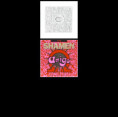
80. THE SHAMEN ‘Omega Amigo’ (Single A Side November 1989)
At the tail end of the eighties, as early converts to acid house The Shamen were ahead of the game. Sure, they would destroy any credibility they might have had when they descended into ‘Eezer goode’ novelty nightmare, but before that came the barely remembered curio ‘Omega Amigo’ and its infamous dialogue sample (‘My time... is yours’ from George Lucas's THX-1138), which may not have been sufficiently hardcore to satisfy the ravers but was certainly enough to introduce hordes of indie loving kids to the joys of the dancefloor.