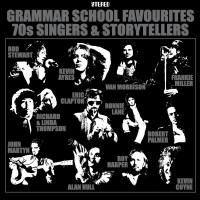
When most people reflect on the great singer songwriters of the seventies they think of insipid, Laurel Canyon, hippy drivel epitomised by the gruesome Crosby, Stills & Nash or Joni Mitchell. But the British version of all that was very, very different, my own experience of it starting when pop music began to take over my life as a young grammar school pupil, and, as laughable as it sounds now, Rod Stewart became the benchmark for everything that was good about the British singers and storytellers of the decade. An entry level singer for most of my generation, in 1972 when my taste in music had still to form, his first four albums became early favourites when my best friend was gifted them by his older sister and he let me borrow them whenever I wished.
Built on the American blues and English folk traditions he had been schooled in as a teenager, Rod Stewart was like every other British solo artist to emerge in the seventies, although their own character and life experience would lead to a wide range of individual styles like the pastoral psychedelia of Kevin Ayres, the deep rooted R&B of Frankie Miller, the experimental folk of John Martyn and the rough around the edges blues rock of Kevin Coyne. That diversity also led to varying degrees of success, Eric Clapton the only one to get anywhere near Rod Stewart in the UK charts, while even the relatively well-known Ronnie Lane and Van Morrison only made fleeting chart appearances. As for the rest, they didn’t get a look in!
Thankfully, chart positions were irrelevant at my school where the likes of Hard Nose The Highway, I Want To See The Bright Lights Tonight and Sunday’s Child could be seen in the fifth and sixth form common rooms being passed around and quietly discussed in earnest by the more serious music heads. Far less visible than the more popular hard rock and progressive rock albums of the time, if I knew anything about them at all it would have been from a rare Old Grey Whistle Test feature or an album review tucked away in one of the music weeklies. Otherwise borrowing them for the night and actually liking them was down to pure serendipity.
If there’s one thing I’ve learnt over my years of writing about music, it’s that my seventies were about every kind of music, and that includes the generation of singers and storytellers I’ve written about here who had been more or less wiped from my memory. I certainly didn’t expect to be reminded of their spirit more than fifty years later sitting in a Dorset pub nursing a pint of Poretti listening to a local twentysomething singing ‘Bye And Bye (Gonna See The King)’. Then again that’s the ethereal magic of music isn’t it, its ability to move us in ways we both can and cannot explain in the unlikeliest of circumstances!
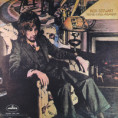
1. ROD STEWART ‘Mama You Been On My Mind’ (Never A Dull Moment LP July 1972)
These days Rod Stewart may be a tired old man going through the motions with barely a trace of his once phenomenal voice remaining, but in 1972 he was the main man, commercially and creatively. More than capable of writing his own songs but much preferring to cover those of others, Never A Dull Moment included material by Jimi Hendrix, Sam Cooke and ‘I’d Rather Go Blind’, a blues classic first recorded by Etta James. Best of all though was his take on Dylan’s ‘Mama You Been On My Mind’, a version that can still move me and one that demonstrates Rod Stewart’s talent as a storyteller better than any other.
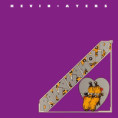
2. KEVIN AYRES ‘Shouting In A Bucket Blues’ (Bananamour LP May 1973)
Kevin Ayers was a slightly wayward soul we used to see knocking around the seedier parts of central London in the late seventies looking to feed his heroin addiction. An unshakeably romantic lothario, Bananamour (the second greatest record to feature a banana on the cover) was the closest he came to making a classic album, the soulful weirdness of ‘Decadence’, the goofy ‘Oh What A Dream’ and ‘Shouting In A Bucket Blues’ in particular showcasing the differing elements of his art.
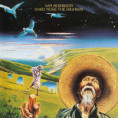
3. VAN MORRISON ‘Hard Nose The Highway’ (Hard Nose The Highway LP August 1973)
In the early noughties Van Morrison came into my life in a big way. In a search for something that has always remained just out of reach, I found his albums strangely reassuring and spiritual. That feeling has dissipated over the years but my fondness for Hard Nose The Highway remains. Often considered his weakest and most uninspired work, at thirteen years old the sleeve illustration alone was enough to get my attention.
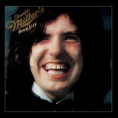
4. FRANKIE MILLER ‘The Devil Gun’ (High Life LP January 1974)
Known solely for his 1978 top ten hit ‘Darlin’, Frankie Miller’s name and reputation as a blues singer had actually been around for years. His second album High Life was recorded in Atlanta and produced by the legendary Allen Toussaint, the southern fried funk of ‘The Devil Gun’ one of his finest originals.
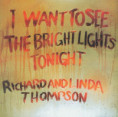
5. RICHARD & LINDA THOMPSON ‘The Calvary Cross’ (I Want To See The Bright Lights Tonight LP April 1974)
In the mid-seventies I was too immature to appreciate an album as sophisticated as I Want To See The Bright Lights Tonight. Richard Thompson’s attempt to produce a form of British folk that was not in thrall to American culture, while the album’s mood was decidedly dark, many of the songs spoke not of self-pity but of the contemplation of life’s cruelties by a writer who was still only 24. A work of striking if painful beauty, more than fifty years later songs like the sorrowful ‘Withered And Died’, ‘The End Of The Rainbow’ and the stirring ‘Calvary Cross’ offer a solace and glimpse of joy I didn’t believe possible.
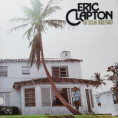
6. ERIC CLAPTON FEAT. YVONNE ELLIMAN ‘Get Ready’ (461 Ocean Boulevard LP July 1974)
In 1974 an Eric Clapton album shouldn’t have been anywhere near my radar. And yet, bored out of my mind on a family holiday in a rainswept, West Country, seaside town, ironically just twenty minutes from where I now live, buying it must have seemed like a good idea at the time. Taking laid back to a whole new dimension, Clapton’s note for note copy of ‘I Shot The Sherriff’, a handful of blues tributes and some self-penned confessionals stand up fairly well, especially when compared to his later records of curdled easy listening.
7. RONNIE LANE ‘Bye And Bye (Gonna See The King)’ (Anymore For Anymore LP July 1974)
As an ex member of The Faces and arguably their most talented songwriter I loved Ronnie Lane’s solo albums. It may have been my imagination or more likely it was the image of the wandering gypsy minstrel he projected. And yet, there was definitely something olde worlde about Anymore For Anymore and songs like ‘The Poacher’ and ‘Bye And Bye (Gonna See The King)’ that was hugely attractive if sentimental in a mid-seventies Britain intent on slowly grinding itself into the dirt via strikes, a three day working week, IRA bombings and two general elections.
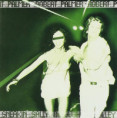
8. ROBERT PALMER ‘Sailing Shoes’ (Sneakin’ Sally Through The Alley LP September 1974)
If there was one thing music critics agreed on in the early seventies it was that Lowell George and Little Feat were Christ like in their genius. I didn’t understand it at all, their brand of accomplished musicianship and supposedly intelligent songwriting leaving me cold, apart from the more notable cover versions of their songs like Nazareth’s speedy, hard rock take on ‘Teenage Nervous Breakdown’ and ex Stone The Crows singer Robert Palmer’s funked up rendition of ‘Sailing Shoes’, both taken from Little Feat’s 1972 album of the same name.
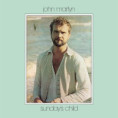
9. JOHN MARTYN ‘Sunday’s Child’ (Sunday’s Child LP January 1975)
John Martyn was a cut above your average, self-destructive, folk rock artist, what with his jazz leanings and love of studio trickery to enhance his records. Like most of the singers here I knew nothing of his background before hearing him for the first time on Sunday’s Child. Expecting song after song of untold misery, I rather liked the unexpectedly sunny nature of ‘One Day Without You’ and the title track while the touches of experimentation on ‘Root Love’ and his arrangement of the traditional ‘Spencer The Rover’ even made my father sit up and listen.
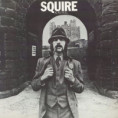
10. ALAN HULL ‘Squire’ (Squire LP May 1975)
The seventies certainly threw up its own fair share of oddities but there were few odder than ex Lindisfarne frontman Alan Hull’s Squire. Written as a soundtrack for a Tom Pickard TV play starring Hull in the lead role, all manner of influences could be heard within the albums 45 minutes including shades of early ELO orchestration on the mid-tempo title track.
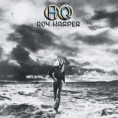
11. ROY HARPER ‘Forget Me Not’ (HQ LP June 1975)
A well connected acquaintance of rock royalty via his friendship with Jimmy Page and appearance on Pink Floyd’s ‘Have a Cigar’, Roy Harper’s enigmatic brand of folk consigned him to the fringes as a cult figure, not in the cool as fuck Syd Barrett way but as an artist admired only by the select few. His eighth studio album HQ included ‘When An Old Cricketer Leaves The Crease’, a long meandering treatise on the game he remembered from his youth, but never a lover of cricket, I preferred the gentle psychedelia of ‘Forget Me Not’.
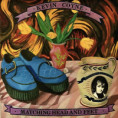
12. KEVIN COYNE ‘Sunday Morning Sunrise’ (Matching Head And Feet LP June 1975)
The only album here I actually bought for myself, and that was largely because of the painting of blue suede shoes on the cover, Matching Head And Feet reminded me of an early Sensational Alex Harvey Band album, but nowhere near as heavy. Pleasant enough in a bluesy, pub rock kind of way, Kevin Coyne’s distinctive voice imbued the songs with a passionate edge that was so familiar, if I didn’t know he’d died back in 2004 I wouldn’t have been in the least bit surprised to wander down my local pub one evening to find him entertaining the locals!