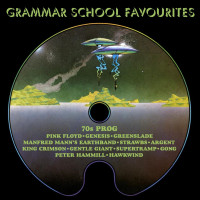
The music press of the mid-seventies may have been misguided in their belief that grammar school kids should have been listening to progressive rock rather than hard rock, but initially I found it much more of a challenge. Listening to acknowledged classics of the genre like Yes’s Close To The Edge, Jethro Tull’s Thick As A Brick and Emerson, Lake & Palmer Brain Salad Surgery as a callow thirteen year old left me feeling bewildered and not a little bored by the overlong, intentionally difficult, self-important song suites and pretentiously titled sub sections.
From that point on it seemed to me that more than anything, prog wanted to be serious music that transcended any vulgar, trivial pop aspects of the sixties and early seventies by aspiring to the giddy aesthetic heights of the symphony, the improvisational virtuosity of jazz, and lyrically to the complexity of poetry and legend. It was also music that could only be English, reflecting as it did the eccentricity, mythology and landscape of our once green and pleasant Albion.
So it’s not in the least bit surprising that prog’s recognised aristocracy of Yes, Pink Floyd, Genesis, King Crimson, Emerson, Lake and Palmer and Jethro Tull were all very English. What’s more, apart from Gong’s Australian uber hippie leader Daevid Allen, the prog underground and lesser lights like Greenslade, Manfred Mann’s Earthband, Strawbs, Argent, Gentle Giant, Supertramp, Peter Hammill and Hawkwind were all English too, Canadian’s Rush only appearing once the genre had infiltrated North America and the continent began to breed its own artists in the same image.
Progressive rock’s saving grace if it had one was the extraordinarily wide range of subgenres subsumed within it, the principal ones being the Canterbury scene, space rock, symphonic prog, eclectic prog, folk prog and crossover prog, although it’s debatable whether the latter and the likes of the Electric Light Orchestra and Supertramp were prog at all. These stylistic variations were all very different to each other but if you didn’t like one subgenre, you were sure to like another. And strangely, just as the music press once predicted, as I grew older I began to appreciate the intricacies and nuances of the music that little bit more, borrowing as many albums as I could and, attracted by their imaginative sleeve designs, even buying the odd one or two.
Of course, all that happened a long, long time ago before the arrival of punk and my own cultural year zero when progressive rock suddenly found itself as the number one target for my necessary ideological purge of the past. And yet incredibly, the artists and albums I’ve documented here somehow survived those turbulent times and even prospered in subsequent decades to become more popular now than ever, certainly if the music played on the digital jukebox down my local pub is anything to go by. And it’s not just the giants of the genre either. While Dark Side Of The Moon has gone on to become the third best belling album of all time with sales of fifty million plus, even relatively unknown oddities like Manfred Mann’s Earthband and Gentle Giant enjoy a healthy Spotify following!
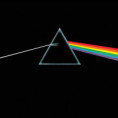
1. PINK FLOYD ‘Time’ (Dark Side Of The Moon LP March 1973)
It’s bizarre to think that I wasn’t introduced to Pink Floyd and progressive rock by some hipster schoolmate but by my father who on the recommendation of Hi Fi Monthly bought Dark Side Of The Moon to test the levels of his scarily expensive stereo sound system. As I got older my friends and I would use it more to soundtrack our cannabis smoking than anything else until the arrival of punk put a stop to that kind of thing. It’s still a great album though, Roger Waters relatively straight forward songs about madness, ageing and death possessing a sense of meaning that seems to increase in relevance and gravitas the older I get.
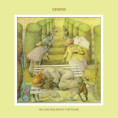
2. GENESIS ‘Dancing With The Moonlit Knight’ (Selling England By The Pound LP October 1973)
I never considered Pink Floyd as progressive rock in the traditional sense whereas Peter Gabriel’s Genesis were prog incarnate. Taking most of their cues from Yes before fashioning them into their own symphonic style, Selling England By The Pound was their great masterpiece. A loose concept album based on Gabriel’s sad tales about the Britain he saw collapsing both morally and culturally around him, it remains as indicative of the early seventies as anything I’ve ever heard and as essential as any one progressive rock album could be.
3. GREENSLADE ‘Bedside Manners Are Extra’ (Bedside Manners Are Extra LP November 1973)
As third division proggers Greenslade and Bedside Manners Are Extra were exactly the kind of tedious, mostly instrumental group and album that gave prog a bad name, their one saving grace being the whimsical, lightweight rock of the title track.
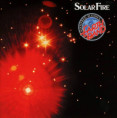
4. MANFRED MANN’S EARTHBAND ‘Solar Fire’ (Solar Fire LP November 1973)
Manfred Mann’s Earthband had a hat trick of top ten hits in the mid-seventies but their albums were generally too inconsistent. Solar Fire was the one they got right, a record of spacy instrumentation, cosmic lyrical themes and epic songs like the fantastic title track and their unrecognisable, ten minute version of Dylan’s ‘Father Of Day, Father Of Night’ that had featured as the final song on New Morning three years earlier.
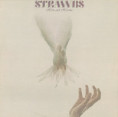
5. STRAWBS ‘Autumn i. Heroine’s Theme ii. Deep Summer’s Sleep iii. The Winter Long’ (Hero And Heroine LP March 1974)
What is it about an artist that makes them so attractive and what on earth was it that possessed me in my early teens to invest so much time in the Strawbs, a folk prog group of dubious distinction? In hindsight I guess it’s easy to hear how their couple of top twenty singles and accompanying album Bursting At The Seams brainwashed me into buying Hero And Heroine the following year. And you know what I really did like it a lot, the opening ‘Autumn’ suite a beautiful, melodic piece that can still send chills down my spine.
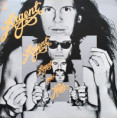
6. ARGENT ‘Music From The Spheres’ (Nexus LP March 1974)
Turn up at any medium sized venue in any medium sized town in the mid-seventies and you would be sure to find Argent bashing out another of their proficient sets of not quite prog and not quite rock. And the same went for Nexus, the fault line between singer and guitarist Russ Ballard’s rock and pop sensibility and keyboardist Rod Argent’s more grandiose prog ambitions there for all to hear on the albums best songs ‘Thunder and Lightning’ and ‘Music From The Spheres’.
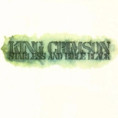
7. KING CRIMSON ‘The Night Watch’ (Starless And Bible Black LP March 1974)
I’ve never been able to shake the feeling that King Crimson’s reputation as one of the kingpins of progressive rock was a misnomer. I can’t recall seeing any of their albums at school, the only exception being when our liberal minded art teacher played us her copy of Starless And Bible Black during a particularly tricky, life drawing exam. I remember being particularly taken with ‘The Night Watch’, a proper song hidden amongst a bunch of improvisations. And yet tellingly, until I got around to compiling this playlist, I hadn’t given the song, the album, King Crimson or the art teacher a second thought in five decades.
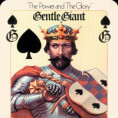
8. GENTLE GIANT ‘Playing The Game’ (The Power And The Glory LP September 1974)
While progressive rock was exclusively English, there was none more English than Gentle Giant. Navigating a way through twentieth century chamber music, medieval chants and an amalgam of complex, multi-faceted folk, jazz and rock patterns, albums such as The Power And The Glory were essential for prog head’s, while a song like ‘Playing The Game’ was much easier for a casual listener like me to appreciate.
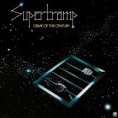
9. SUPERTRAMP ‘School’ (Crime Of The Century LP September 1974)
In the Autumn/Winter of 1974 Crime Of The Century was everywhere, ‘School’, ‘Bloody Well Right’, ‘Hide In Your Shell’ and ‘Dreamer’ staples of every fifth form party. Supertramp would go on to become my ultimate guilty pleasure in the late seventies, but while I could appreciate ‘Schools’ criticism of the education system five years before Pink Floyd turned the same idea into a concept album, there was something about the slickness of Crime Of The Century that made me feel slightly queasy and curiously still does.
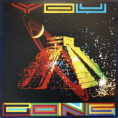
10. GONG ‘Master Builder’ (You LP October 1974)
Of all the artists to appear in the early seventies there were none so wacky, influential or truly loveable as Gong. Impossible to categorise, my relationship with them began in 1974 with Camembert Electrique and Flying Teapot purchased for next to nothing in a Reading second hand shop and ended with Planet Gong’s Live Floating Anarchy in 1978 and a friendly connection between drummer Kif Kif Le Batteur’s (aka the late Keith Dobson) pioneering DIY cassette label Fuck Off Tapes and my own X Cassettes. So the copy of You being carried around my school would have been by the fourteen year old me. Not that anyone took any notice or wanted to borrow it, the albums long space jams littered with synth drones and Steve Hillage’s psychedelic guitar and often goofy vocals clearly not for everyone.
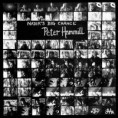
11. PETER HAMMILL ‘Pompeii’ (Nadir’s Big Chance LP February 1975)
Focusing on the fictional persona of Rikki Nadir, an eternal sixteen-year-old with a bad attitude in black leather and mirror shades, Nadir’s Big Chance was a concept album of sorts and very different to Peter Hammill’s day job with Van Der Graaf Generator who’s Godbluff almost made the cut here but was just too dull. That’s one thing Nadir’s Big Chance wasn’t, the rowdy title track and ‘Birthday Special’ rubbing up against the doomy croon of ‘Shingle Song’ and the fabulously grandiose ‘Pompeii’.
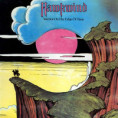
12. HAWKWIND ‘Assault And Battery/The Golden Void’ (Warrior On The Edge Of Time LP May 1975)
In the context of the seventies it’s impossible to explain how radical Hawkwind sounded when I heard them for the first time. While there were a few experimental records around, their use of electronics in their spaced out, futuristic way made their albums much more enjoyable. Warrior On The Edge Of Time the best of them. Keen to appease the progressive music press, it featured some of writer Michael Moorcock’s more elaborate sci-fi concepts in a very stoned, typically seventies expression of epic, and in the mesmerising and majestic ‘Assault And Battery/The Golden Void’ and ‘Magnu’ two of the finest tracks they would record.