I thought I’d written everything there was to write about the music of the seventies until my local Dorset pub persuaded me otherwise. A tiny yet vital live venue catering for the musicians of the South West, I’ve always found it intriguing that the music played there is so completely rooted in the hard rock, progressive rock and blues and folk based singer/storyteller tradition of the late sixties and early to mid-seventies; no punk, no post punk, no disco, no hip hop, no electronica, in fact, nothing recorded after 1975!
While I was surprised how such a place could remain financially viable in the twenty first century, what really interested me was how such deeply unfashionable music continues to exert such a powerful pull on those born long after it first appeared. The seventies was clearly one of the most productive and creative decades for popular music culture, but my experience of those genres was minimal to say the least. Far more interested in the alien artfulness of Bowie and Roxy Music and the urban teen anthems of glam, hard rock in particular played such a minor role in my adolescence that what limited knowledge I did have came from albums borrowed from obliging schoolmates.
That was easy at my grammar school because hard rock was the most prominent and popular genre by far, calling into question the received wisdom of the weekly music press who insisted on promoting the idea that it was the sole preserve of working class, secondary modern, council estate kids, while lower middle class, grammar school, suburban kids like me were supposed to prefer the complex compositions of progressive rock instead. Not that I cared. Barely in my teens and still fabulously naïve, I learnt more about hard rock from Sweet B Sides than I ever did from any long haired, cock swinging, misogynistic behemoths. After all, it was never music you had to think about too much was it?
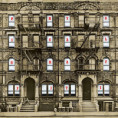
Having said that, it didn’t take too long before I discovered that actually it was Led Zeppelin and not The Sweet who were the essence of what hard rock would become in the mid-seventies. When it came to Physical Graffiti (the first Led Zeppelin album I owned), I knew instinctively that in terms of poetry, sexuality, sonic adventure and Jimmy Page’s reinvention of what constituted a guitar hero, they were the best there was or ever would be. And yet in 1975 I also knew that Led Zeppelin and their holier than thou attitude represented everything that was wrong about British rock!
Conceived and recorded as pure escapism, hard rock allowed its audience to forget their shitty workaday lives by losing themselves in the ferocious riffage and clichéd fantasies of hip grindin’ chicks and hard lovin’ bad boys. While those of us awaiting our own revolution dismissed the rock star lifestyle as ridiculous, the hard rock audience gloried in their own fantasies being projected back at them, raising their fists in salute as their mortal heroes became half naked, golden haired Adonises in the elixir of youth.
Fast forward to the here and now and those fantasies seem more ridiculous than ever, particularly when I come across a bunch of balding, denim clad pensioners with their hip replacements and arthritic knees trying to strut their stuff to ‘All Right Now’. Yet while the songs I’ve written about here failed to have any cultural effect on me at all, there’s no denying they do possess a certain charm and are certainly reminiscent of the era they were made in. Turn them up loud, shut your eyes, take a deep breath and I swear you can smell the body odour, Double Diamond and Player's Number Six!
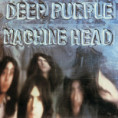
1. DEEP PURPLE ‘Highway Star’ (Machine Head LP March 1972)
Deep Purple were the rock group of choice in my grammar school, certainly more so than Led Zeppelin whose first four albums remained mysteriously unseen and unheard. Conversely, In Rock, Fireball and Machine Head were everywhere but near on impossible to borrow, such was the demand amongst lads of a certain age. Instead I found a budget compilation similar to the Hot Hits series dedicated to Deep Purple on the spinner rack in my local newsagent and for a couple of months or so was enthralled by such hard rock classics as ‘Black Night’, ‘Speed King’, ‘Strange Kind Of Woman’ and greatest of them all, the thunderous ‘Highway Star’.
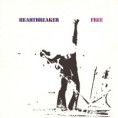
2. FREE ‘Come Together In The Morning’ (Heartbreaker LP January 1973)
In 1984 Billy Duffy of The Cult told me that his favourite album of all time was The Free Story, a best of Free compilation from 1973. At the time I was horrified, but given what The Cult would subsequently turn into, I shouldn’t have been. Not that I’d ever heard The Free Story. But I had heard Heartbreaker and the quietly compelling ‘Come Together In The Morning’, the best thing Paul Rodgers ever wrote and the albums clear highlight despite the presence of ‘Wishing Well’.
3. STATUS QUO ‘Softer Ride’ (Hello! LP September 1973)
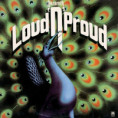
4. NAZARETH ‘Teenage Nervous Breakdown’ (Loud ‘N’ Proud LP November 1973)
When we were young my mother would farm out me and my brother in the school holidays to an old school friend of hers who lived in a huge, detached house near Farnham. Her eldest son Chris was a similar age to me and in the winter of 1973 we discovered the delights of Status Quo and Nazareth. Within a year Chris would disappear from my life when my mother found to her horror that I had grown too old to be farmed out to anyone, but hearing Hello and Loud ‘N’ Proud again is a reminder of those carefree, teenage times.
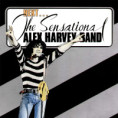
5. THE SENSATIONAL ALEX HARVEY BAND ‘Faith Healer’ (Next LP November 1973)
Unlike the other albums here, Next was not one I borrowed from a classmate and then forgot about because The Sensational Alex Harvey Band were one of my teenage favourites, right up there with Mott The Hoople, The Faces and all those other idiosyncratic lunatics. Not strictly glam but not 100% hard rock either, Next was when the rock kids latched on due to ‘Faith Healer’ and its anthemic chorus. Quite what those same kids made of Harvey’s sordid rendition of Jacque Brel’s title track about army brothels, queer lieutenants and gonorrhoea, God only knows!
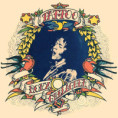
6. RORY GALLAGHER ‘Cradle Rock’ (Tattoo LP November 1973)
Rory Gallagher was known as a blues guitarist extraordinaire so I made it my mission to avoid him at all costs until one week, at a loss for something new to listen to, I was offered Tattoo for the night. Not my kind of thing at all, nonetheless I was pleasantly surprised by ‘Tattoo’d Lady’ and ‘Cradle Rock’ until the expected guitar solo’s kicked in and reminded me that as far as true greatness was concerned, virtuosity meant fuck all!
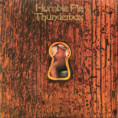
7. HUMBLE PIE ‘Ninety Nine Pounds’ (Thunderbox LP February 1974)
Humble Pie were one of those groups everyone in my school had read about but no-one had actually heard until Thunderbox. Housed in a tasteless sleeve featuring a die-cut, keyhole design through which a woman could be seen sitting on a toilet, I really wanted to love it but struggled with the groups boring boogie and Steve Marriott’s hideous, Americanised screech, the Stonesy cover of Anne Peebles ‘Ninety Nine Pounds’ the only decent thing on it.
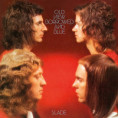
8. SLADE ‘Good Time Gals’ (Old New Borrowed And Blue LP February 1974)
I learnt a lot about hard rock from Sweet B Sides like ‘Blockbuster’s ‘Need A Lot Of Lovin’ but there were other glam groups like Slade who had a lot more about them than just some badly spelt hits. If you bothered to listen, their albums were packed with tracks not that much different to the best any of the other groups here had to offer, something particularly true of ‘Good Time Gals’ which bore a striking similarity to Humble Pie except Noddy Holder’s throaty roar was infinitely preferable to Steve Marriott’s.
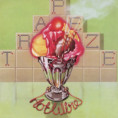
9. TRAPEZE ‘Back Street Love’ (Hot Wire LP May 1974)
An album benefitting from its cool, airbrushed sleeve art, Trapeze were known more for their 21 year old lead vocalist and bassist Glenn Hughes jumping ship to join Deep Purple than anything else. Hot Wire followed his departure and instantly confounded the critics with some unexpectedly great, technically brilliant songs, the fluent and funky ‘Midnight Flyer’ and swaggering ‘Back Street Love’ two of their best.
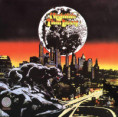
10. THIN LIZZY ‘Still In Love With You’ (Nightlife LP November 1974)
Before ‘The Boys Are Back In Town’ and Jailbreak turned them into rock superstars, Thin Lizzy were struggling journeymen who had once enjoyed a top ten hit with their version of ‘Whiskey In The Jar’. Like Jailbreak, Nightlife could boast of a brilliantly illustrated sleeve but that’s where the similarities ended, the albums ten songs an odd mix of not entirely successful rockers and slower, more subdued tunes like the softly lilting ‘Still In Love With You’.
11. LED ZEPPELIN ‘Houses Of The Holy’ (Physical Graffiti LP February 1975)
In hindsight it’s easy to view 1975 as something of a watershed year for British rock with many of the more successful groups struggling with creative burnout and cultural irrelevance. The same wasn’t quite true of Led Zeppelin due to the brilliance of Physical Graffiti, and yet there was still a feeling that they were under a tremendous amount of strain and the end, artistically at least, was starting to come into focus.
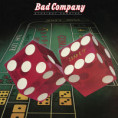
12. BAD COMPANY ‘Good Lovin’ Gone Bad’ (Straight Shooter LP April 1975)
A quartet of jaded muso’s from Free, Mott The Hoople and King Crimson, in the winter of 1975/76 Bad Company were being hailed as the new messiahs by those who really should have known better. Embarrassingly, I fell for their rancid meat and potatoes bluster too until a girlfriend saved me from myself by pointing out the error of my ways. Even more embarrassing is that Bad Company are still revered today, a rowdy rendition of ‘Feel Like Makin’ Love’ guaranteed to send the regulars in my local home happy.