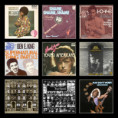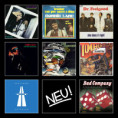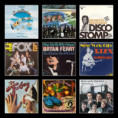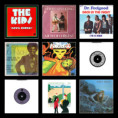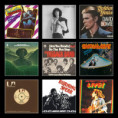
Midway through the seventies, Britain had become a bigoted, grim little island of perpetual mayhem; an epoch of bleak surroundings, mean spirited inhabitants, terrorist bombings, serial killers and state endorsed police racism, sexism and homophobia, not to mention the permanent threat of random street violence shadowing your every move. One of the worst times to be a teenager, hanging around the local shops at night with your mates could lead to anything from a few choice insults to a brutal kicking if the wrong gang of rivals turned up. And this was in Earley, one of my hometown of Reading’s more salubrious suburbs!
As if all that wasn’t bad enough, mainstream music culture continued to be dominated by the same smug, thirty something icons like Dylan, Neil Young, The Who, Led Zeppelin, Joni Mitchell and John Lennon who had literally nothing to say to a generation who didn’t give a fuck about their past. And they were just the tip of the iceberg. Among the best-selling albums of the year were The Eagles One Of These Nights, Paul Simon’s Still Crazy After All These Years, Pink Floyd’s Wish You Were Here and Steely Dan’s Katy Lied, all of which were bought and enjoyed by middle-aged, hi-fi nuts like my father on their expensive, state-of-the-art, sound systems.
For a fifteen year old boy whose only means of escape was the records he listened to, the only place to find any resistance to that kind of dull, AOR nonsense was the New Musical Express, a weekly music paper that had become my bible from the moment I realised pop culture meant a hell of a lot more than just hollow entertainment. The review sections, especially those written by Nick Kent, Charles Shaar Murray and Mick Farren, were essential for finding out what to spend my hard earned cash on, a new Saturday morning job at Parslows Bakery meaning I had the funds to buy more records in a week than I previously had in a month.
While the British music scene appeared to have been hijacked by a bunch of lusty voiced, white, blues singers in bollock bulging, velvet loons braying about their hard lovin’ ways, or even worse, noodling, prog virtuosos and fantasists with their banks of keyboards and double necked guitars, the NME tended to feature more challenging artists and albums requiring serious effort, specialist shops and mail order to acquire, which for some reason made them sound even more interesting and defiant.
Annoyingly, for a town hosting one of the major festivals of the seventies every August, Reading had an appalling lack of regular music venues. In 1975, the old Town Hall featured the strictly lower league Budgie, Barclay James Harvest, Rory Gallagher and Stackridge while The University, where it was notoriously difficult for under eighteen, non-students to get tickets, hosted Fruup, The Baker Gurvitz Army, Curved Air, Ace, Steeleye Span and Argent. Occasionally someone mildly entertaining like Be Bop Deluxe or Hawkwind would turn up, but listening to any of that lot it’s easy to hear why the coming of punk was inevitable.
With so little excitement around to ease the tedium of our existence, and with nothing to go on but word of mouth rumour, my mates and I would show up at one of the many village halls or youth clubs dotted around for a disco or the appearance of a local group, no matter how many buses it took to get there. With a decent PA and lights, Wokingham Rock Club was one of the better venues and would become one of our regular Friday night haunts to watch serious young rockers with names like Silver Fox, Mountain Ash, TNT and Hot Air! And yet, while these groups were all skilled instrumentalists, rarely did they stray from set lists comprised entirely of note perfect renditions of established rock songs like ‘All Right Now’, ‘Stairway To Heaven’, ‘Hey Joe’, ‘Wishing Well’ and ‘Caroline’. One notable exception was a trio of Forest school sixth formers who stood out only because they played the blues, a strange choice for a bunch of middle class, white boys and a genre I considered old hat even then.
As good as they were, none of these youthful musicians dreamt of writing their own songs, getting signed to a record label or making a living from something they loved. In 1975 that was considered far beyond the capability of mere mortals like us and more a part of an exclusive fantasy world inhabited by God like superstars in their palatial ivory towers with a never ending supply of sycophantic lackeys, teenage nymphs and powders on hand to satisfy their every whim.
A lack of ambition and self-worth seemed to permeate everything in the seventies, although somehow, despite never having played in my life, I still ended up drumming with a group of fifth form nerds led by Nick, a talented if slightly bonkers guitarist I’d known since primary school. My reasoning was that if the Velvet Underground’s Moe Tucker could do it so could I, except I couldn’t, not really. And yet, while I was never going to be much good as a drummer, the one thing I could offer was organisation and my ability to get shit done.
So, in customary fashion, I set to work immediately by naming them Midnight Creeper, drafting in my Rod Stewart lookalike best mate John to sing and lining up a few village hall shows of our own before weaning them off their rotten Beatles set list and turning them onto Mott The Hoople’s ‘Crash Street Kids’, The Sensational Alex Harvey Band’s ‘Tomahawk Kid’, Lou Reed’s ‘Hangin’ Round’, Eno’s ‘Needle In The Camels Eye’ and Bowie’s ‘Panic In Detroit’, none of which sounded remotely like Free or Status Quo even after we’d massacred them!
While Midnight Creeper would prove a brilliant grounding in the actual mechanics of being in a group, my commitment would gradually diminish as the year went on, the attraction of girls and underage drinking far too enjoyable to resist. Not that my obsession with music suffered. In fact, if anything it increased even more until it began to permeate every aspect of my life; from my DIY, Keith Richards hair cut to the gold hoop in my ear, and from the raggedy, blonde girls I liked to the dog eared copies of Fear and Loathing In Las Vegas, Junkie and A Journey Through America With The Rolling Stones I read.
The opening of Quicksilver Records in the Butts Centre also had an immeasurable impact, feeding my insatiable appetite even more by making hard to get, leftfield albums and box after box of imported roots reggae singles freely available in my hometown for the first time. By then soul, funk and what would soon be known as disco had become as much a soundtrack to my life as anything else; The Calcot Hotel on Monday’s, The Peacock cellar bar on Friday’s and The Top Rank on Saturday’s becoming regular hang outs and drinking dens as I edged closer to sixteen. Entry was for over eighteen’s only, but with seventies licensing law enforcement so slack it was perfectly possible to be a raging alcoholic at fifteen.
The distraction of playing and listening to music helped to keep thoughts about my immediate future and ‘What next?’ at bay until the day of reckoning finally arrived with my O-Level results. While I had put in the hard graft revising earlier in the year, it still came as a surprise to find that I had done rather well. The downside was that having set the bar unachievably high as usual, my mother chose to concentrate on my couple of failures rather than my successes, at which point it suddenly dawned on me that no matter what I achieved in the future, it was never going to be good enough for her.
Determined not to impale myself on my mother’s burden of expectation, our relationship, which was already one of mutual animosity, deteriorated still further until we could barely tolerate being in the same room together, much less have a conversation. Having gone through school a year underage and still only fifteen, I had no choice but to return to Theale Green to start A-Level's, unaware that in a final act of desperation, my mother had coerced the family doctor into referring me to a mental health day care facility to be ‘fixed’ by a psychiatrist in a white coat.
The idea of rebellion always starts somewhere and in the world of the transgressive teenager, it’s safe to say that with the dubious delights of psychotherapy to come, mine started right there. In what turned out to be a fairly turbulent couple of months, I took the only form of resistance left open to me and started bunking off school, all day, everyday. With my older friends already gone, I took to hanging around the local café or mooching around Reading town centre with the other habitual skivers and generally getting up to no good. Bored far beyond the point of distraction, I longed to escape but had no idea how until the end of the school term and a week before my sixteenth birthday when the headmaster informed my shocked parents that due to persistent truanting my attendance in full time education was no longer required. Two weeks later I would sign on the dole.
Free at last and possessed by the burning optimism of youth and enthused by my own sense of alienation, of being different and a little off the straight and narrow, with £9 a week to play with, a secondhand FS1E to get around on and my first serious girlfriend by my side, I felt like something was coming and whatever it was would give me the sense of purpose I was seeking. Little did I know that it would also shape the rest of my life!
1. BETTY WRIGHT ‘Shoorah Shoorah’ (Single A Side January 1975)
2. SHIRLEY & COMPANY ‘Shame Shame Shame’ (Single A Side January 1975)
3. AL GREEN ‘L-O-V-E (Love)’ (Single A Side February 1975)
4. BEN E. KING ‘Supernatural Thing Part 1’ (Single A Side February 1975)
The end of my 1975 was very different to the start which was naïve, innocent and more or less what you would expect from a just turned fifteen year old. Most Saturday nights I could be found smoking the ten Number Six I’d bought from the machine outside the newsagent and secretly downing a bottle of Woodpecker cider at the Saturday night, church hall disco where brilliant singles like ‘Shoorah Shoorah’, ‘Shame Shame Shame’, ‘L-O-V-E (Love)’ and the effortlessly funky ‘Supernatural Thing’ were guaranteed to get the girls dancing and the boys wishing they could.
5. DAVID BOWIE ‘Young Americans’ (Single A Side February 1975)
‘Young Americans’ was the start of Bowie’s short lived plastic soul period. Initially I found it disappointing, not because I didn’t like soul music, but because I thought that a white, British, rock star appropriating the sumptuous sound of Philadelphia was questionable on every level. And yet, incorporating one of his greatest ever lyrics, choruses and arrangements, before too long it had become one of my most loved Bowie songs.
6. JOHN LENNON ‘Stand By Me’ (Single A Side February 1975)
The only Lennon recording I could bear as a teenager growing up in the seventies was his take on Ben E King’s ‘Stand By Me’, a recording that in reality was less about him and more about loony tunes producer Phil Spector. Not surprisingly it’s the least revolutionary song here, but then Lennon was always a bit of a con on that front wasn’t he?
7. LED ZEPPELIN ‘Trampled Underfoot’ (Physical Graffiti LP February 1975)
In 1975 Led Zeppelin were the classic example of superstar musicians who had become too old, too rich and too damn pleased with themselves, guitarist Jimmy Page being the most indulgent of the lot with a recently acquired heroin habit, an obsession with the occult philosophies of Aleister Crowley and a taste for underage groupies. Even bassist John Paul Jones had become exhausted by Page’s shenanigans and was seriously considering quitting to become the choirmaster at Winchester Cathedral. But there’s no denying that Physical Graffiti was a masterpiece.
I first heard it when I stayed at the home of a friend who lived in the old servant’s quarters of Bere Court, a mansion house a few miles west of Pangbourne. Blown away by the albums sheer chutzpah, the main event was the eighteen minutes of record one side two on which the heavy duty ‘Houses Of The Holy’ was followed by the extraordinary deconstructed funk of ‘Trampled Underfoot’ before ending with ‘Kashmir’, its sweeping, swirling, eight minutes of strange magic exemplifying everything that made Led Zeppelin great.
8. PETER HAMMILL ‘Nadir’s Big Chance’ (Nadir’s Big Chance LP February 1975)
Drawn from personal emotions and situations, Peter Hammill’s lyrics were always very different to the standard, fantasy, prog guff. But it was only when he adopted the persona of Rikki Nadir, an eternal sixteen-year-old with a bad attitude in black leather and mirror shades, on Nadir’s Big Chance that he finally wrote the music to match. Opening with a ‘one-two-three-four’ to rival the Ramones, the title track is often touted as proto punk, although I remember it more as three minutes and thirty seconds of rowdy, abstract noise which was clearly ground breaking but also took some getting used to.
9. MICK RONSON ‘Billy Porter’ (Play Don’t Worry LP February 1975)
Packed with cover versions including a backing track for the Velvet Underground’s ‘White Light/White Heat' salvaged from Bowie's sessions for Pin Ups, Play Don’t Worry included just two Mick Ronson originals. Never a prolific or confident songwriter, the stomping, psycho-on-the-street tale of ‘Billy Porter’ was the best of them and arguably the finest thing he ever wrote.
10. STEVE HARLEY & COCKNEY REBEL ‘Mr Raffles (Man It Was Mean)’ (The Best Years Of Our Lives LP March 1975)
There was no chance of seeing anyone as popular as Steve Harley & Cockney Rebel in a town like Reading, his star having grown inordinately bright since 1973 when I first heard the lush, orchestral strains of ‘Sebastian’. So neither my equally infatuated best friend nor I could quite believe it when his sister got us tickets to see them on the Best Years Of Our Lives tour at Bristol Colston Hall, the bonus being we were to stay at her place in Southville for a few days. My first live experience, it was such a momentous coming of age, and such an eye opening, incredible experience before, during and after that the date of 23rd March 1975 remains engraved on my memory.
11. RONNIE LANE ‘Brother Can You Spare A Dime’ (Single A Side March 1975)
As an ex-member of the Faces Ronnie Lane could do no wrong so it was heart-warming to witness the success of ‘How Come’ and ‘The Poacher’. A forty year old, American, jazz standard from the Great Depression, ‘Brother Can You Spare A Dime’ was nothing like his regular, folk and country blues style, but still undeniably Ronnie.
12. DR FEELGOOD ‘She Does It Right’ (Single A Side March 1975)
Dr Feelgood deserve respect for taking pub rock out of the public bar and into the nation’s consciousness. OK, so they may have sounded worryingly close to a trebly, provincial take on sixties R&B, complete with their own rendition of the Godawful ‘Johnny B Goode’, but Wilko Johnson’s frantic, self-penned songs painted a gritty, vivid portrayal of urban life, capturing both the mad energy and mundane routine that would become so familiar a couple of years later.
13. JOHN CALE ‘Dirty Ass Rock’n’Roll’ (Slow Dazzle LP March 1975)
The mid-seventies proved something of a creative peak for John Cale with Fear, Slow Dazzle and Helen Of Troy recorded and released just over a year apart. I preferred the slightly more accessible Slow Dazzle, especially on the musical ribaldry of ‘Dirty Ass Rock’n’Roll’ which I adored above all else. Years later I would discover that the album documented a particularly harrowing period in Cale’s life dominated by his excessive drug consumption, the decline of his marriage and ultimately his mental health.
14. IAN HUNTER ‘Once Bitten Twice Shy’ (Single A Side April 1975)
It didn’t seem to matter that Ian Hunter was a 35 year old, ale drinker from Shrewsbury because he understood instinctively the mystery of rock’n’roll, his songs possessing a rare indefinable otherness that only comes along every so often. The rabble rousing ‘Once Bitten Twice Shy’ was no different, transmitting the same feeling to me, a bewildered lost boy high on the energy and passion of youth but imprisoned by the mind numbing monotony and crushing expectations of his surroundings, Ian Hunters ordinariness giving me faith in the belief that there really was a better life out there somewhere.
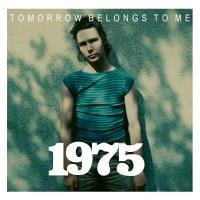
15. THE SENSATIONAL ALEX HARVEY BAND ‘Tomorrow Belongs To Me’ (Tomorrow Belongs To Me LP April 1975)
A much misunderstood show song from Cabaret, the 1966 Broadway musical and 1972 film starring Liza Minnelli, I thought long and hard about including ‘Tomorrow Belongs To Me’ here because of its controversial nature. Written by two Jewish musicians John Kander and Fred Ebb, the song was designed to shock the audience and establish the rise of the Nazi Party as the stories main theme. At fifteen, forty year old Alex Harvey’s straight version affected me deeply for reasons I still can’t explain, his attempt to satirise Hitler by daring to sing it in the first place often resulting in ridiculous accusations of Nazism. Troubling, chilling and with the current rise of the far right a possible portent of the future, ‘Tomorrow Belongs To Me’ means more today than ever before.
16. KRAFTWERK ‘Autobahn’ (Single A Side April 1975)
I’d love to say I recognised Kraftwerk’s genius from the second I heard ‘Autobahn’s repetitive, electronic pulse, but I’d be lying. In reality it was no more than a pleasingly eccentric novelty to be played for a couple of weeks and then discarded. Hovering somewhere between glams last stand and the genesis of disco, my sonic education hadn’t yet stretched to the pioneering exploits of a quartet of German machinists.
17. NEU! ‘Hero’ (Neu! 75 LP April 1975)
I had limited knowledge of Krautrock before Neu!. My old man’s copy of Tangerine Dream’s Phaedra and Kraftwerk’s ‘Autobahn’ single were all I knew and neither fully prepared me for the radical nature of Neu! ’75. At such a young age, the exploits of a couple of German longhairs were beyond my limited comprehension, the album sounding invigorating if slightly monotonous. Of course now I’m able to fully recognise their genius; the motorik drive of ‘E-Musik’, the glacial emptiness of ‘Leb Wohl’, the proto punk of ‘Hero’, and how in 1975 they were at least ten steps ahead of everyone else.
18. BAD COMPANY ‘Feel Like Makin’ Love’ (Straight Shooter LP April 1975)
Midnight Creeper’s five minutes of fame came in the autumn of 1975 at Theale Green School Arts Festival when we were asked to play ‘Feel Like Makin’ Love’ to accompany a troupe of dancing girls. It wasn’t a song any us we’re keen on, nonetheless, we grabbed our chance and ended up playing it to most of the school one rainy, October lunchtime. That brief appearance also served another useful purpose when, just a month later, one of those dancing girls became my first serious girlfriend.
19. THE KINKS ‘Everybody’s A Star (Starmaker)’ (A Soap Opera LP May 1975)
Older brothers and sisters played a huge part in the musical education of my generation. As I didn’t have any of my own, I had to rely on those of my friends, one of whom was a massive Kinks fan. A Soap Opera was one of Ray Davies more obscure concept album’s I would never have heard otherwise, not that I cared about the story itself. All that mattered was that the pomp and swagger of opener ‘Everybody’s A Star (Starmaker)’ made it the best Kinks song in years.
20. CURTIS MAYFIELD ‘Billy Jack’ (There’s No Place Like America Today LP May 1975)
Raised on a diet of top thirty chart singles, when I finally got to hear the albums of Curtis Mayfield they sounded like they came from another planet, which in a way they did, certainly when you were a lower, middle class, grammar school kid from the Home Counties. If anything, the self-explanatory There’s No Place Like America Today was the most alien of them all, its chilly, sparse arrangements and slowly unfolding tales of murder, depression, prayer, paranoia and poverty a testament to the genius of their maker.
21. HAMILTON BOHANNON ‘Disco Stomp’ (Single A Side May 1975)
It’s rarely mentioned these days, but the primitive, stripped down, four-to-the-floor rhythm of session drummer Hamilton Bohannon’s tracks fitted in seamlessly with the seventies explosion of drum heavy glam, the resurrection of sixties soul singles by the Northern Soul scene and the mid-seventies records made in their sonic image. Of course, in the end it was the coming of disco that made him a star, the raw relentless drive of ‘Disco Stomp’ possessing the necessary groove to get everyone on their feet.
22. FOX ‘Imagine Me Imagine You’ (Single A Side May 1975)
With female glam artists in short supply, it was left to Noosha Fox to woo the boys with her wistful, bewitching demeanour and glamour girl chic. A forerunner for the likes of Kate Bush and most strikingly Alison Goldfrapp, her accented purr on ‘Imagine Me, Imagine You’ was wonderfully exotic and totally addictive.
23. BRYAN FERRY ‘You Go To My Head’ (Single A Side June 1975)
In 1975 Bryan Ferry was still the most effortlessly suave artist around, a tuxedo clad sophisticate whose jaded songs about love marked him out as the most elegant lounge lizard of them all. ‘You Go To My Head’ was another of his immaculate remakes, a thirties jazz standard transformed into a sultry, cultured slice of pop characterised by a lush arrangement and his smooth, emotive croon. Utterly fabulous, as ever it allowed my imagination to indulge in my go to fantasy of being an aristocratic, Brideshead Revisited fop without a care in the world.
24. T. REX ‘New York City’ (Single A Side June 1975)
While ‘You Go To My Head’ was a wordy, intricately constructed, minor masterpiece, ‘New York City’ took Marc Bolan’s lyrical minimalism to a new extreme with just four lines of nonsense repeated across its entire four minute duration. Yet somehow, it still sounded astonishing!
25. THE TUBES ‘White Punks On Dope’ (The Tubes LP June 1975)
Arriving as if from nowhere with a name for sex, biting social commentary, virtuoso art rock, roadies dressed as giant cigarettes and prosthetic penises, The Tubes debut couldn’t hope to match their wild reputation and it didn’t, the rich kid bashing ‘White Punks On Dope’ their sole claim to fame. A song that would prolong its shelf life by making it into the UK singles chart at the arse end of punk, despite being both satirical and outlandish, I believed it to be a work of such magnitude there just had to be something more meaningful hidden within, only to conclude months later that there wasn’t.
26. KEVIN COYNE ‘Saviour’ (Matching Head And Feet LP June 1975)
I’d never heard of Kevin Coyne until I spotted Matching Head And Feet in the racks of Harlequin Records. Attracted as much by the blue suede shoes painting on the sleeve as anything else, it was one of my rare shot in the dark purchases that actually paid off. With a gravelly voice reminiscent of Rod Stewart crossed with the surrealism of Captain Beefheart, it was Coyne’s first serious attempt at commercial success and as such showcased his unique, rough around the edges approach, the most memorable songs being the unhinged lunacy of ‘Turpentine’ and the more conventional, therefore more likeable, ‘Saviour’.
27. KILBURN & THE HIGH ROADS ‘Crippled With Nerves’ (Handsome LP June 1975)
Art school lecturer Ian Dury was a notoriously nasty bastard who just happened to have a barrel organ full of great tunes to back himself up. Forming Kilburn & The High Roads in 1971 with some of his students, he eventually gained a foothold in the formative pub scene four years later, ‘Upminster Kid’ an archetypal slice of observation pointing the way to his solo career and manifestation as Johnny Rotten’s sinister, older uncle.
28. HEAVY METAL KIDS ‘The Cops Are Coming’ (Anvil Chorus LP June 1975)
The only time I made it to Reading Festival was in 1975 when Lou Reed was due to headline the Sunday night but cancelled at the last minute. What made it worse was that we didn’t find out until midway through a dismal Saturday afternoon. Having suffered the long forgotten Zzebra, Babe Ruth, Snafu, the Kursaal Flyers and a subdued Thin Lizzy, it was left to Gary Holton and his noisy, irreverent, Heavy Metal Kids to save our sorry souls. With the ghastly Supertramp and headliners Yes still to come and only the equally terrifying prospect of Wishbone Ash, Robin Trower and the Mahavishnu Orchestra to look forward to on the Sunday, we fucked off after The Kids and didn’t bother going back. And I’ve not been back since.
29. CHRIS SPEDDING ‘Motor Bikin’ (Single A Side July 1975)
For a gang of fifteen year old misfits desperately seeking their place in the world, in the summer of 1975 there was no-one cooler than Chris Spedding. With slicked back hair, black leather jacket, black jeans and a Gibson Flying V, ‘Motor Bikin’ stole our hearts with a dumb arse riff and 500cc of attitude.
30. DR FEELGOOD ‘Back In The Night’ (Single A Side July 1975)
Forgetting guitarist extraordinaire Wilko Johnson for a moment, what really made Dr Feelgood so great was the menace in Lee Brilleaux’s nicotine growl which elevated a three minute wonder like ‘Back In The Night’ from beery machismo to something far more undefinable and dangerous.
31. SYL JOHNSON ‘Take Me To The River’ (Single A Side July 1975)
Released a year after the Al Green original, Hi Records label mate Syl Johnson’s ‘Take Me To The River’ used Green’s producer Willie Mitchell and most of his musicians to record his faster, tougher, and dare I say it, better version. Receiving countless plays on British radio, it inadvertently boosted sales of Green’s recently released Greatest Hits compilation but mysteriously failed to chart itself.
32. FUNKADELIC ‘Get Off Your Ass And Jam’ (Let’s Take It To The Stage LP July 1975)
The strange and fantastical world of George Clinton’s P-Funk was a fascinating concept but one that actually sounded even weirder than it looked. I’d heard plenty of Stevie Wonder, Sly Stone and Curtis Mayfield before, but nothing could have prepared me for Funkadelic’s raw, slower than sludge mess of grunts and groans. Arriving with immaculate timing at a point when I was becoming bored with almost everything ‘rock’n’roll’ had to offer, Let’s Take It To The Stage provided a handy staging post dripping with funks carnal energy yet still littered with devastatingly heavy riffage.
33. RAS MICHAEL & THE SONS OF NEGUS ‘None A Jah Jah Children No Cry’ (Single A Side August 1975)
34. JUNIOR BYLES ‘Fade Away’ (Single A Side September 1975)
When Quicksilver Records opened in the autumn of 1975, I suddenly gained access to a host of obscure reggae imports. A major label mountain of cash away from Bob Marley & The Wailers ‘rock’ reggae, I knew precious little about Jah, Rastafari or Marcus Garvey and never pretended to. And yet, just through hanging around the shop on a Saturday afternoon, it didn’t take long for me to discover that the power and directness of mindblowing records like ‘None A Jah Jah Children’ and ‘Fade Away’ was all-encompassing as both a physical experience and a spiritual lesson.
35. ENO ‘St Elmo’s Fire’ (Another Green World LP September 1975)
Eno’s Here Come the Warm Jets and Taking Tiger Mountain (By Strategy) were remarkable blasts of avant-garde glam that fired my imagination and recalibrated my idea of what popular music could be. His third solo album Another Green World felt like a million miles away from all that. Lacking any recognisable style it was impossible to categorise so suffered accordingly, ‘St Elmo’s Fire’ and ‘I’ll Come Running’ as close as it came to conventional songs.
36. ROXY MUSIC ‘Both End’s Burning’ (Siren LP October 1975)
No matter how bad things got in the mid-seventies, I knew I could rely on Bryan Ferry and Roxy Music. Alongside undeniable greats ‘Love Is The Drug’, ‘Sentimental Fool’ and ‘Could It Happen To Me?’, Siren featured the thunderous ‘Both Ends Burning’, one of my all-time favourite songs from Roxy’s distinguished catalogue. With Andy Mackay, Phil Manzanera and Paul Thompson finding their own freedom to roam, a persistent bass groove, swirling synth and Bryan Ferry in characteristic disguise as a man reflecting on a past of shattered romance, it was one of the most thrilling songs of the decade.
37. THE SENSATIONAL ALEX HARVEY BAND ‘Gamblin’ Bar Room Blues’
(Single A Side November 1975)
One of my most treasured groups of the seventies, The Sensational Alex Harvey Band were an esoteric bunch of misfits in the grand tradition of unapologetic British eccentrics who had a knack for reimagining and revitalising songs from a diverse range of eras and genres. Their boozy, sing-a-long take on Jimmie Rodgers ‘Gamblin’ Bar Room Blues’ was the apex of that extraordinary talent.
38. PATTI SMITH ‘Redondo Beach’ (Horses LP November 1975)
In the winter of 1975 I became deeply suspicious of Patti Smith and her bohemian pretensions. Of course, I still bought Horses, why would I not when it was being treated with such reverence by writers whose opinion I respected. And yet, clearly in thrall to rock’n’roll tradition and the Beat poets, while I liked the odd song, the albums propulsive delivery and controversial subject matter failed to move me as much as I believed it should. And perhaps therein lay the problem; how could a record so burdened with praise ever live up to the hype surrounding it.
39. DAVID BOWIE ‘Golden Years’ (Single A Side November 1975)
Following the disappointment of Young Americans fake plastic soul, the release of ‘Golden Years’ heralded not only Bowie’s return to form but my first serious relationship. In the past I’ve used the song as a metaphor for that experience, so much so that now it’s impossible for me to hear it as anything other than superficially happy and optimistic (‘Look at that sky life’s begun / Nights are warm and the days are young’), but underneath pleading, depressing and heartbreaking (‘There’s my baby lost that’s all / Once I’m begging you save her little soul’).
40. HAROLD MELVIN & THE BLUE NOTES ‘Don’t Leave Me This Away’ (Wake Up Everybody LP November 1975)
In the seventies girls didn’t like rock of any sort and my first girlfriend was no different, something she let me know in no uncertain terms when she pointed out how it was all macho bullshit and completely irrelevant to the likes of us. From that moment on I rid myself of any faint notion I may have had of following the likes of Bad Company, Nazareth, Montrose or Thin Lizzy down the treacherous dead end to hard rock ruin and instead followed her on the path of righteousness to Harold Melvin & The Blue Notes and the quite wondrous Wake Up Everybody.
41. FATBACK BAND ‘(Are You Ready) Do The Bus Stop’ (Single A Side November 1975)
42. PARLIAMENT ‘Give Up The Funk (Tear The Roof Off The Sucker)’ (Mothership Connection LP December 1975)
43. BANBARRA ‘Shack Up’ (Single A Side December 1975)
The primitive club culture of the mid-seventies may have been a step up from the out of the way, spit and sawdust pubs my mates and I were frequenting more and more in the summer of 1975, but by the standards of today they were basic and unsophisticated. Most of the records played in these places were selected from the top thirty, but upstairs at The Top Rank was The Night Owl, a club within a club for the slightly older, more discerning connoisseur. Thick with the fug of dope, the predominantly black clientele would groove the night away to awe inspiring, rare cuts from the likes of The Ohio Players, Brass Construction, The Fatback Band, Parliament and the one I remember above all others, Banbarra’s ‘Shack Up’.
44. BURNING SPEAR ‘Slavery Days’ (Marcus Garvey LP December 1975)
Born in the same St Ann’s Bay area as Marcus Garvey and Bob Marley, Winston Rodney, aka Burning Spear, made two albums worth of brilliant recordings for Studio One that were informed by his belief and faith in Rastafari. Moving on to work with sound system operator and producer Jack Ruby, the epochal Marcus Garvey (coincidentally my first true roots album) transformed him into Jamaica’s primary ‘cultural’ singer concerned only with writing about black history, its relation to ghetto living and the salvation of Rastafari.
45. BOB MARLEY & THE WAILERS ‘Lively Up Yourself’ (Live! LP December 1975)
Bob Marley was never my favourite roots prophet, not by a long shot. And yet, like most white, British teenagers, in the seventies it was him who gave me my first real lesson in reggae; what it was, what it meant and what it could be. And it was Live! that finally established his reputation as a spiritual figurehead. Aided and abetted by The Wailers tight rhythms and The I Threes sweet voices, and cloaked in an atmosphere of unity and celebration so glorious that by the time ‘Lively Up Yourself’ kicked in, I had no choice but to submit to its overwhelming sense of joy.